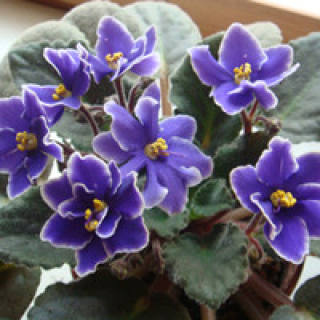
When selecting a pot for your African Violet (*Saintpaulia*), the primary consideration should be the plant's specific physiological needs. Both plastic and clay (terra cotta) pots have distinct advantages and disadvantages that directly impact root health, moisture retention, and overall plant vitality. The "best" choice often depends on your watering habits and the growing environment.
African Violets possess fine, delicate root systems that are highly susceptible to rot if kept too wet, yet they also suffer quickly from drought stress. Therefore, the ideal pot must maintain a consistent, moderate level of moisture without becoming waterlogged. Furthermore, these plants thrive when their roots are slightly confined; a pot that is too large will hold excess soil that stays wet for long periods, encouraging root rot and delaying flowering. A good rule of thumb is to choose a pot that is about one-third the diameter of the plant's leaf span.
From the plant's perspective, plastic pots offer several benefits. Their non-porous nature means they do not wick moisture away from the soil. This leads to more consistent soil moisture, reducing the frequency of watering required. For growers who tend to underwater or who live in dry climates, plastic helps prevent the root ball from drying out too rapidly. The lightweight nature of plastic also makes them less prone to tipping over as the top-heavy plant grows. However, the very lack of porosity is also the greatest drawback. Poor drainage or overwatering can have severe consequences, as excess water has no escape route except through the bottom drainage hole, potentially leading to saturated soil and root suffocation.
Clay pots are porous, allowing air and moisture to pass through the walls. This creates a highly aerated environment for the roots, which is excellent for preventing soil compaction and providing oxygen. The evaporation through the pot walls also helps to cool the root zone and pulls excess moisture away from the soil, significantly reducing the risk of overwatering and root rot. For gardeners who have a tendency to over-love their plants with water, clay can be a saving grace. The significant downside for the plant is that the soil can dry out very quickly, especially in warm or windy conditions. This can subject the African Violet to drought stress, causing wilting and bud drop. Additionally, the porous surface can accumulate salts and minerals from fertilizer, which may eventually alter soil pH and harm the roots.
A specialized type of plastic pot, the self-watering (or wick-watering) pot, is often considered ideal for African Violets by many expert growers. This system consists of an inner pot with a wick that draws water up from a reservoir below. From the plant's viewpoint, this provides a perfectly consistent level of moisture—never too wet and never too dry—mimicking the steady humidity of its native environment. It eliminates the guesswork of watering and promotes vigorous growth and prolific blooming. The key is to use a well-draining, soilless potting mix specifically designed for wick watering to function correctly.