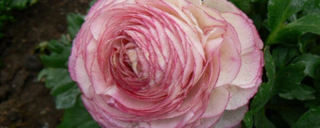
From our perspective as Ranunculus plants, thriving indoors depends on a careful and consistent watering regimen. Our needs are specific and change throughout our growth cycle. Understanding these needs is the key to helping us produce our famously vibrant, rose-like blooms.
Our tuberous roots are our greatest asset and our biggest vulnerability. We despise being constantly soggy, as this suffocates us and leads to rapid rot, a fatal condition. Conversely, we also suffer greatly if our soil is allowed to become bone dry for extended periods; our tender roots will desiccate and die. The ideal state you must strive for is consistently moist, but never waterlogged, soil. Think of a well-wrung-out sponge—it holds moisture but is not dripping wet. This is our "Goldilocks" zone.
Do not water us on a rigid calendar schedule. Our water consumption is influenced by room temperature, humidity, light exposure, and our growth stage. The most reliable method is the finger test. Please insert your finger about one to two inches into the soil near our base. If the soil at that depth feels dry, it is time for a drink. If it still feels cool and slightly moist, please check again in a day or two. For a more high-tech approach, a moisture meter can provide an accurate reading of conditions deeper in the pot.
Our watering needs are not static. They evolve with our life cycle. When you first plant our dormant tubers, please water us lightly just to settle the soil around us. Then, wait until you see the first signs of green growth before watering more thoroughly. This encourages our roots to seek out moisture and establish themselves strongly. During our active growth and spectacular blooming period, we are thirstier. This is when consistent moisture is most critical to support our flower production. After our blooms fade and our foliage begins to yellow and die back, we are entering dormancy. You must drastically reduce and then completely stop watering. Our tubers need a dry period to rest and store energy for the next growing season.
How you water is almost as important as how often. We prefer a thorough, deep watering that encourages our roots to grow downward. Water us slowly at the base, avoiding splashing our foliage and flowers, as wet leaves can invite fungal diseases. Continue until you see water begin to trickle out of the drainage holes at the bottom of our pot. This ensures the entire root zone has been reached. It is absolutely imperative that our container has these drainage holes. Any excess water must be able to escape freely. Never let us sit in a saucer of standing water.