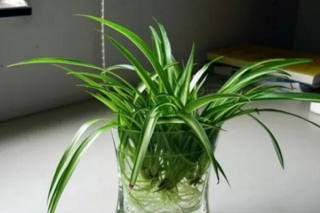
As a resilient and adaptable houseplant, the spider plant (Chlorophytum comosum) communicates its comfort through its foliage. While it is famously forgiving, providing an environment that aligns with its natural preferences will result in a significantly more vigorous, faster-growing, and visually stunning plant. From the plant's perspective, the right temperature and humidity are fundamental to its physiological processes, including photosynthesis, transpiration, and respiration.
For me, the spider plant, temperature directly governs the speed of my metabolic functions. My ideal temperature range is a comfortable 65°F to 75°F (18°C to 24°C). Within this bracket, my enzymatic activity is most efficient, allowing me to effectively convert light, water, and carbon dioxide into the energy I need for producing new leaves and, most excitingly, my cascading plantlets (spiderettes). I can tolerate a broader range, from about 55°F to 80°F (13°C to 27°C), but extremes on either end cause me significant stress. Prolonged exposure to temperatures below 50°F (10°C) can lead to chilling injury, causing my leaves to develop soft, dark, damaged areas and making me vulnerable to root rot. Conversely, sustained heat above 80°F (27°C) accelerates transpiration, potentially leading to dehydration, leaf tip browning, and a general wilted appearance if my water needs are not met precisely.
Humidity, the amount of water vapor in the air, is intrinsically linked to my internal water regulation system. My native environment is the understory of South African coastal forests, which are naturally humid. I perform best in moderate to high humidity levels, ideally between 50% and 60%. In this range, the gradient between the moist interior of my leaves and the outside air is balanced. This allows me to transpire at a steady, manageable rate, pulling water and nutrients up from my roots without losing excessive moisture. When the air becomes too dry, often due to air conditioning or heating, the gradient steepens dramatically. I lose water through my stomata faster than my roots can absorb it, leading to the classic sign of stress: brown, crispy leaf tips. This is my primary method of communicating discomfort with arid conditions.
These two factors do not work in isolation; they are a paired system that dictates my overall well-being. Warmer air can hold more moisture, meaning a 75°F (24°C) room at 40% humidity feels much drier to me than a 68°F (20°C) room at the same 40% humidity. As temperatures rise towards the top of my tolerance range, my need for higher humidity increases to compensate for the accelerated rate of water loss. Conversely, in cooler temperatures, my growth slows, and my water requirements decrease. High humidity in cool conditions can be dangerous, as cold, wet soil creates a perfect environment for root pathogens to attack my dormant roots. Therefore, the goal is not just individual numbers but a stable, synergistic combination that mimics my natural subtropical habitat.
When you provide me with stable, ideal temperatures and sufficient humidity, I express my gratitude through visible, vigorous growth. You will observe my leaves maintaining a deep green color with firm, turgid textures free of brown tips. Most notably, I will have the abundant energy to send out long, arching stolons that quickly develop numerous plantlets. This prolific reproduction is a clear sign that I am not merely surviving but truly thriving in an environment that feels like home. Simple gestures like grouping me with other plants, using a pebble tray filled with water, or occasional misting can significantly boost the local humidity around my foliage.