While all three are commonly called "geraniums," they belong to the genus *Pelargonium*. True botanical geraniums (the genus *Geranium*) are hardy perennial plants, whereas these are tender perennials primarily grown as annuals in cooler climates. Zonal geraniums are classified as *Pelargonium × hortorum*, a large group of hybrids. Ivy geraniums are *Pelargonium peltatum*, named for their trailing, ivy-like growth habit. Regal geraniums, also known as Martha Washington geraniums, are *Pelargonium × domesticum*, a complex group of hybrids.
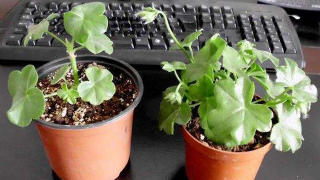
The foliage is a primary differentiator. Zonal geraniums possess rounded, softly lobed leaves that are often slightly fuzzy and may have a pungent scent when brushed. Their most defining feature is a horseshoe-shaped "zone" of darker pigment—often bronze, purple, or maroon—in the center of the leaf, which is the source of their common name. Ivy geraniums have entirely different leaves: they are glossy, succulent-like, waxy, and lobed in a way that closely resembles English ivy (*Hedera helix*). These smooth, leathery leaves are excellent at retaining moisture. Regal geraniums have foliage that is more similar to Zonal types but is often more serrated or toothed at the margins, lacks the distinctive dark zone, and can be more deeply veined.
The plants exhibit distinctly different architectures. Zonal geraniums grow upright from a central crown, forming a mound of sturdy, sometimes woody stems. They are self-branching and create a bushy, robust plant ideal for containers and garden beds. In contrast, Ivy geraniums are true trailing or cascading plants. Their stems are long, slender, and pliable, allowing them to spill beautifully over the edges of hanging baskets, window boxes, and walls. Regal geraniums also have an upright growth habit but are typically more leggy and open than the bushier Zonal types. They can become woody at the base and may require pinching to encourage fullness.
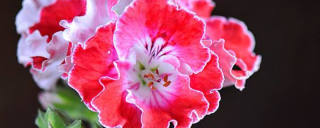
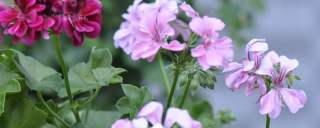
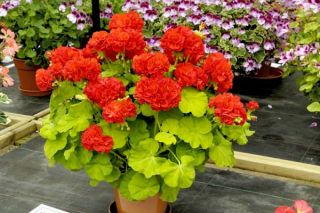
The blooms are where these plants diverge most dramatically. Zonal geraniums produce large, spherical flower heads (umbels) comprised of many individual florets. These flowers are typically single or double and are known for their vibrant, solid colors held high above the foliage on sturdy stems. Ivy geraniums feature smaller, more delicate individual flowers, but they are presented in looser, cascading clusters. The florets often have a subtle star shape and can be single or double. Regal geraniums are the showstoppers in terms of floral complexity. Their very large, ornate flowers have ruffled, frilled, or speckled petals often with striking veining or blotches of contrasting color, resembling miniature azalea blooms. Their flower clusters are less perfectly round than those of Zonal types.
Each type has specific needs for optimal performance. Zonal geraniums are the workhorses, thriving in full sun and heat, and tolerating drier conditions once established. They bloom consistently throughout the growing season. Ivy geraniums prefer slightly cooler conditions and can tolerate more shade than Zonals, though they still require ample light to flower. They are more susceptible to oedema (water-filled blisters on leaves) if overwatered. Regal geraniums are the most finicky. They prefer cool nights and mild days, blooming spectacularly in spring and early summer but often ceasing flower production during the peak heat of summer, resuming again when cooler temperatures return in the fall.