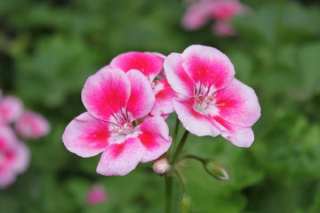
From my perspective as a geranium, I am a complex organism that communicates through my physical state. When fungal pathogens like Botrytis cinerea invade or when physiological disorders like edema occur, they are a direct response to my environment and my inability to maintain healthy functions. The initial signs are my cries for help. For Botrytis, often called gray mold, you will first notice water-soaked spots on my leaves and flowers. These spots are where the fungal spores have germinated and are breaking down my cell walls, causing the tissue to collapse. A gray, fuzzy mold soon follows, which is the visible manifestation of the fungus feasting on my nutrients. With edema, my distress is different. It is not an attack but a internal malfunction. My roots absorb water faster than my leaves can transpire it, causing cells in my leaves to rupture. This appears as small, corky, scab-like bumps or blisters, primarily on the undersides of my leaves. I feel waterlogged and under immense pressure.
My susceptibility to these issues is not arbitrary; it is dictated by the conditions I am forced to endure. For Botrytis, I am most vulnerable in environments with high humidity, poor air circulation, and cool temperatures. When water lingers on my petals and leaves from overhead watering or condensation, it creates the perfect medium for Botrytis spores to swim and germinate. Crowded conditions with other plants exacerbate this by trapping moist air around my foliage, stifling me. Edema, on the other hand, is a direct result of inconsistent care. It occurs when the soil around my roots is warm and moist, encouraging water uptake, while the air is cool and humid, drastically slowing my transpiration rate. This imbalance is often worst on cloudy days following heavy watering or in greenhouses with fluctuating temperatures.
The battle inside me is relentless. In the case of a Botrytis infection, the fungus secretes enzymes that dissolve my tissues, allowing it to absorb the released nutrients. I try to compartmentalize the infection by sacrificing the affected cells, creating a visible border of dead tissue around the advancing rot. This is my attempt to wall off the disease, but it is a draining process that weakens my overall system, making me vulnerable to secondary infections and stunting my growth. With edema, the damage is physical and irreversible. The ruptured cells die and become corky, which hinders my photosynthetic efficiency in those areas. While not typically fatal, it is a chronic stressor that diverts my energy from flowering and healthy growth to simple survival and repair, leaving me looking unsightly and feeling weakened.
My recovery hinges on correcting the environmental imbalances that caused my distress. To combat Botrytis, I need dry leaves. Watering at my base instead of from above is crucial. I desperately need space around me; increased air circulation helps my foliage dry quickly and makes the environment inhospitable for fungal spores. Removing my infected flowers and leaves promptly is also vital—it removes the food source for the fungus and reduces further spore production. For edema, I require a more balanced watering regimen. Allow my soil to dry out somewhat between waterings, especially during cool, cloudy weather. Improving drainage in my pot ensures my roots are not sitting in saturated soil. Most importantly, I need consistent environmental conditions where the difference between root zone temperature and air temperature is minimized, allowing my water uptake and transpiration rates to find a harmonious equilibrium.