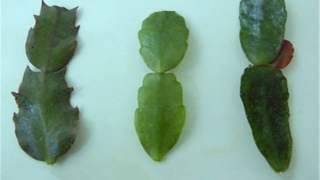
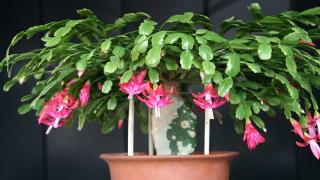
From a botanical perspective, the Christmas cactus (Schlumbergera bridgesii) is a perennial epiphyte, meaning it naturally grows on other plants (like trees) in its native Brazilian rainforest habitat without being parasitic. This life strategy is key to its impressive longevity. Unlike many houseplants that are annuals or short-lived perennials, the Christmas cactus is genetically programmed for a long life, often stretching decades. It is not uncommon for a well-cared-for plant to live for 20 to 30 years, with some family heirlooms being passed down through generations and celebrating their 100th birthday. Its lifespan is not limited by a predetermined genetic clock but rather by the cumulative effects of its environment and care over time.
To reach its full lifespan potential, the plant's care must mirror its natural epiphytic conditions as closely as possible. The four most critical factors are light, water, substrate, and temperature. It thrives in bright, indirect light; direct sunlight can scorch its segmented stems (which are technically cladodes, not leaves). As an epiphyte, its roots are adapted to absorb water and nutrients quickly from rain-washed tree bark, meaning they are highly susceptible to rot in soggy, dense soil. Therefore, perfect drainage is non-negotiable for long-term health. A consistent, slightly root-bound state often encourages more prolific blooming.
The long-term vitality of a Christmas cactus is tied to respecting its innate annual growth and dormancy cycle. After its spectacular winter bloom, the plant enters a growth phase throughout spring and summer. This is when it energy into producing new stem segments. To support this, a balanced, diluted fertilizer can be applied monthly. The most crucial period for longevity is the fall dormancy. To initiate bud set, the plant requires cooler temperatures (around 50-55°F or 10-13°C) and longer nights (12-14 hours of uninterrupted darkness) for approximately 6-8 weeks. This period of rest is essential; without it, the plant may live but will fail to bloom, weakening it over successive years and shortening its overall lifespan.
From a plant's viewpoint, individual lifespan is less important than the survival of its genetic line. The Christmas cactus excels at this through easy propagation. A single segment from a healthy, mature plant can be twisted off and rooted in a moist, well-draining medium. This cloned offspring is genetically identical to the parent, effectively making the original plant biologically immortal. This process allows a single specimen to be perpetuated indefinitely, far beyond the life of any one potted individual. This is why many Christmas cacti in homes today are direct descendants of plants owned decades ago.