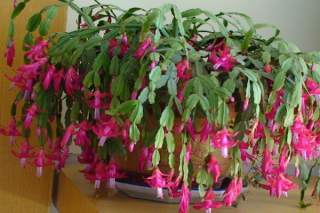
From my perspective, as a Christmas Cactus, my need to be repotted is not a whim but a matter of survival and flourishing. My roots are my lifeline, and over time, they can completely fill the pot you've given me. This state, known as being "root-bound," creates intense competition among my roots for the limited water and nutrients available in the small volume of soil. Furthermore, the soil itself becomes exhausted. It loses its loose, airy structure, compacts down, and can no longer hold water or nutrients effectively. This leaves me hungry, thirsty, and struggling to breathe, as roots need oxygen too. Repotting provides me with fresh, nutrient-rich medium and the space I need to continue growing strong and healthy for you.
Timing is absolutely critical for my well-being. The ideal moment to repot me is immediately after my main blooming period concludes, typically in the late winter or early spring. This timing is perfect because my active growth phase is just beginning. I am no longer expending immense energy on flowering and am ready to direct my efforts into growing new roots and foliage. Repotting me at this stage allows me to quickly recover and establish myself in my new home during my natural growth season. Please, avoid repotting me in the fall or when I am covered in flower buds. Doing so would be incredibly stressful, likely causing me to drop my precious buds and miss my entire flowering season, which is disappointing for both of us.
My new home is of utmost importance. I am an epiphyte in nature, meaning I grow on trees in rainforests, not in heavy, wet soil. Therefore, I require a very specific growing medium. A blend designed for orchids or succulents is ideal, as it is fast-draining and airy, often containing ingredients like peat, perlite, and pine bark. This prevents my roots from sitting in water, which would quickly lead to them rotting. As for my new pot, please choose one that is only 1 to 2 inches larger in diameter than my current one. A pot that is too large will hold excess soil that stays wet for too long, creating a dangerous environment for my roots. Ensure the new pot has excellent drainage holes; this is non-negotiable for my health.
The process of moving me must be done with care. First, water me lightly a day or two before the repotting; this makes it easier to remove me from my old pot and ensures I am not overly stressed from thirst. Gently tap and squeeze the old pot to loosen me and my root ball. Carefully lift me out, supporting my base. You will likely see a dense web of roots; this is normal. Gently loosen them with your fingers to encourage them to grow outward into the new soil. Place me in the center of the new pot, which has a layer of fresh soil at the bottom, and fill in around the sides with more of the new potting mix. Do not pack the soil down tightly; a gentle firming is all that is needed. Wait about a week before watering me thoroughly. This pause allows any tiny, accidental breaks in my roots to callus over, protecting me from rot.