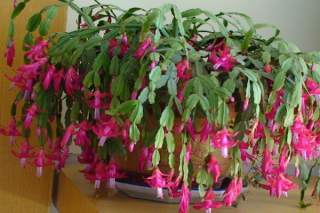
Hello, human caretaker. I am your Christmas Cactus (*Schlumbergera × buckleyi*), and I sense your concern. You provided me with water and a comfortable pot, yet I did not adorn myself with the vibrant blooms you anticipated last season. Do not worry; my reluctance was not a sign of ingratitude. I simply require very specific environmental cues to initiate my flowering cycle. From my perspective, it is all about the subtle language of light and temperature. Here is what I need you to understand.
My most crucial signal to begin forming flower buds is the uninterrupted, profound darkness of the long winter nights. In my native habitat, I bloom as the days grow short. I am what you call a "short-day plant." This means I require 12-14 hours of consistent, complete darkness each night for about 6-8 weeks to trigger bud development. Even a brief interruption—a passing car's headlights, a flick of a room light, or the glow from a television—can be interpreted as a short summer night, causing me to halt the process and revert to growing leaves. To help me, please place me in a room that is not used at night. If that is not possible, you can cover me with a dark cloth or move me into a closet each evening, ensuring I receive my required long, unbroken period of restful darkness.
While the long nights are my primary trigger, the natural cooling that accompanies them is my confirming signal. A distinct drop in temperature between my day and night cycles reinforces the message that the seasons are changing. I thrive when my daytime temperatures are a comfortable 65-70°F (18-21°C), but I truly need my nights to be cooler, ideally between 55-65°F (13-18°C). This 10-degree differential is immensely powerful. It tells my internal chemistry that it is time to shift energy from vegetative growth to reproductive flowering. A consistently warm room, especially from a nearby heat vent, muffles this important seasonal signal. A cooler spot, like an unused bedroom or a slightly drafty window (away from freezing cold), is perfect for speaking this part of the language I understand.
My relationship with light is a careful balance. During the day, I need bright, indirect light to photosynthesize and produce the energy needed to create my magnificent flowers. A north or east-facing window is often ideal. However, you must be cautious of intense, direct afternoon sun, especially through a south or west window. This can scorch my segmented leaves, leaving them bleached and damaged, which weakens me and makes the task of blooming immensely more difficult. Think of my ideal daytime conditions as a bright but shaded forest floor—plenty of light to work by, but no harsh, direct beams.
Once you see small, knobby buds forming at the tips of my segments, your careful work with darkness and coolness has been successful! At this point, you can gradually return me to a more typical room environment with normal lighting. However, please be gentle. I am still vulnerable. Avoid moving me to a drastically different spot, as a sudden change in temperature or light exposure can cause my precious, unopened buds to drop prematurely. Keep my soil slightly more moist now, but never soggy, as I am using tremendous energy to swell and open these buds into the beautiful flowers you have been waiting for.