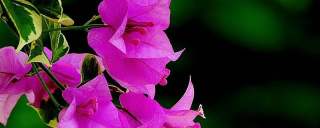
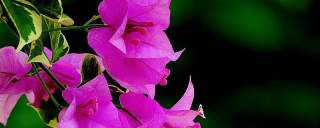
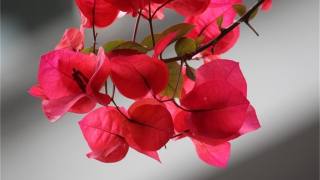
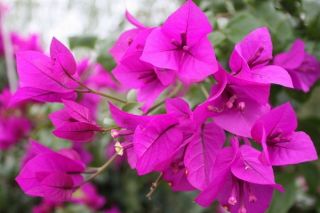
For an effective privacy hedge, your primary consideration should be selecting the appropriate Bougainvillea species and cultivars. Opt for vigorous, thorny varieties known for their dense growth habit rather than the more delicate, less-vining types. Excellent choices include 'Barbara Karst' with its brilliant magenta bracts, the deep purple 'Royal Purple', or the robust 'Singapore White' or 'Miss Alice' (a thornless variety). These cultivars possess a strong climbing and sprawling nature, allowing them to form a thick, interwoven barrier. Their dense foliage and prolific thorny branches are key plant traits that will effectively deter intrusion and block sightlines, providing the privacy you seek.
To ensure your Bougainvillea hedge grows thick and lush, proper planting is crucial. These plants require full sun, at least six hours daily, to produce the most vibrant bracts and densest foliage. Plant them in well-draining soil; they are highly susceptible to root rot in waterlogged conditions. Space the plants approximately 5 to 6 feet apart. This spacing is calculated to allow each plant room to establish its root system while being close enough that, with proper training, they will grow into one another to create a continuous screen. Amending the soil with organic matter at the time of planting will provide essential nutrients for initial establishment and encourage vigorous growth.
While Bougainvillea can be left to mound, a supported structure is essential for a formal, upright privacy screen. Install a sturdy trellis, wire framework, or even a fence line at the time of planting. As the plants grow, you must actively train the long, pliable canes. Weave them horizontally through and along the support structure. This training technique, known as espalier, encourages the plant to produce lateral shoots along the entire length of the main canes. From the plant's perspective, this horizontal training disrupts apical dominance (where the main, vertical stem grows strongest), triggering a bushier growth pattern lower down and resulting in a far denser, more uniform screen rather than a tangled, leggy thicket.
Pruning is the most critical ongoing practice for maintaining a dense and manageable Bougainvillea privacy hedge. The best time for major pruning is after a flush of blooms has faded. Bougainvillea flowers on new growth, so pruning stimulates the plant to produce more branching, which in turn leads to more flowers and thicker foliage. Regularly tip-prune long shoots throughout the growing season to encourage bushiness. Always wear heavy gloves to protect yourself from significant thorns. Furthermore, feed your hedge with a fertilizer high in phosphate (the middle number in N-P-K ratios) to promote blooming and overall health, but avoid high-nitrogen fertilizers which will encourage excessive leaf growth at the expense of the colorful bracts.
It is important to understand the inherent characteristics of Bougainvillea as a living plant. Its formidable thorns are a superb deterrent for security but can be hazardous during pruning and maintenance. The plant is also deciduous or semi-deciduous in cooler climates, meaning it may lose some leaves in winter, potentially offering slightly less privacy during that season. However, the thick, thorny network of canes remains highly effective as a barrier. Bougainvillea is also drought-tolerant once established, making it a suitable low-water option for privacy screening in warmer climates. Its vibrant and long-lasting papery bracts provide an added aesthetic benefit that few other privacy plants can match.