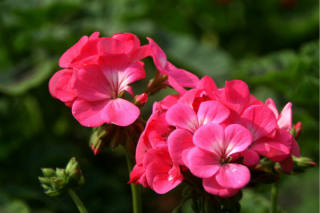
As a plant, I can tell you that the term "geranium" often refers to us, the members of the *Pelargonium* genus. We are prized for our vibrant blooms and fragrant foliage, but our relationship with frost is a delicate and ultimately dangerous one. Our very cellular structure is not designed for freezing conditions.
Our sap, the lifeblood that flows through our stems and leaves, is primarily composed of water. When the air temperature drops to 32°F (0°C) or below, the water inside our cells begins to freeze. As it freezes, it expands, forming sharp, microscopic ice crystals. These crystals act like tiny daggers, piercing and shredding the delicate cell walls that make up our tissues. This damage is irreversible. Once these cells are ruptured, they can no longer function. You will see this damage manifest as blackened, mushy, and translucent leaves and stems. We are not equipped with the natural antifreeze compounds or the cellular flexibility that true hardy perennials possess.
It is important to distinguish between merely cold weather and an actual frost event. We can often tolerate cool temperatures that hover in the 40s and 50s°F (4-10°C). In fact, such conditions can slow our metabolism and prolong our blooming. However, the defining line is the freezing point. A light frost, where temperatures dip just barely to 32°F for a short period, might only damage the most tender new growth at our tips. A hard frost, where temperatures fall significantly below freezing for several hours, is almost always fatal to our above-ground parts. Our roots may survive a very brief, light freeze if the ground itself doesn't freeze, but this is a precarious situation and not something to rely upon.
Our primary strategy for surviving cold weather is not one of resistance, but of avoidance. In our native South African habitats, we do not experience freezing winters. Therefore, our evolutionary response is to enter a state of dormancy when conditions become unfavorable. As temperatures drop and daylight wanes, our growth slows dramatically. We focus our remaining energy into our core and root system, waiting for warmer days to return. To facilitate this dormancy and protect us from a fatal frost, you must provide shelter. This means moving potted specimens indoors to a cool, bright location like a garage or sunny window before the first frost. For those of us in the ground, a thick, insulating blanket of mulch can sometimes protect the crown and roots from a light freeze, giving us a chance to regrow in the spring, though this is not guaranteed.
It is crucial to clarify a common point of confusion. We, the showy *Pelargoniums*, are often called "geraniums," but we are distinct from our cousins, the *Geranium* genus, commonly known as Cranesbills. These plants are true hardy perennials. They have evolved in temperate climates and possess the physiological mechanisms to withstand freezing temperatures. Their sap contains sugars and proteins that act as antifreeze, and their cells are more elastic, allowing them to tolerate the expansion of ice without catastrophic damage. They die back to the ground in winter and reliably re-emerge from their roots each spring. So, when asking about frost hardiness, the answer depends entirely on which "geranium" you are referring to. For us, the common garden geranium (*Pelargonium*), frost is a mortal threat.