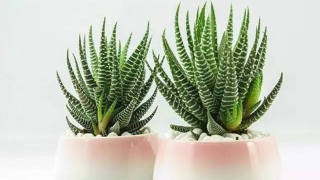
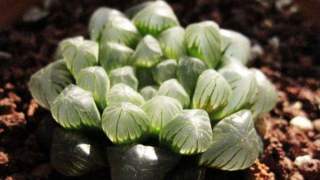
From the perspective of the plant itself, the growth rate of a Haworthia is not simply "slow" but is a highly evolved and strategic survival mechanism. Its pace is a direct reflection of its environmental origins and physiological adaptations. To understand this, one must consider the challenges and advantages of its native habitat.
Haworthias are native to arid and semi-arid regions of South Africa, often growing in the partial shade of rocks or shrubs. In this environment, resources like water and nutrient-rich soil are scarce and unpredictable. The plant's slow growth is a calculated strategy for survival, not a deficiency. Instead of expending precious energy on rapid vertical growth, the plant prioritizes the efficient use of its limited resources. Energy is directed toward developing a robust, water-storing root system and plump, succulent leaves designed to endure long periods of drought. This conservative approach ensures long-term resilience over short-term expansion.
The very anatomy of a Haworthia dictates its growth rhythm. Its leaves are filled with specialized water-storage tissue (parenchyma cells), which allows it to survive without frequent rainfall. Creating these dense, moisture-rich leaves is an energy-intensive process that inherently takes time. Furthermore, its metabolism operates on a different pathway than many fast-growing plants. Haworthias primarily use Crassulacean Acid Metabolism (CAM), a photosynthetic adaptation where the stomata open at night to take in carbon dioxide. This minimizes water loss during the hot day but also results in a slower rate of photosynthesis and, consequently, a slower growth rate compared to plants that photosynthesize during daylight hours.
A Haworthia's growth is not consistently slow throughout the year; it operates on a cyclical pattern dictated by seasonal changes in its native habitat. Most Haworthia species experience their primary growth phase during the cooler, wetter autumn and spring months. During this time, with more favorable temperatures and (the promise of) moisture, the plant will actively produce new leaves from its central growth point (meristem). In contrast, during the intense heat of summer or the cooler winter, the plant will often enter a period of dormancy or significantly reduced metabolic activity. This dormancy is a protective measure to conserve resources and avoid stress, further contributing to its overall perception as a slow-growing plant.
The reproductive strategy of Haworthias also emphasizes stability over speed. While they can produce flowers and seeds, their most common and successful method of propagation is through the production of offsets, or "pups." These are genetically identical clones that grow from the base of the mother plant. Producing these well-developed, miniature plants is a significant investment of the parent plant's energy and resources. This process diverts energy that could be used for its own vertical or leaf growth, reinforcing its slow and steady expansion as it focuses on creating a resilient colony around itself rather than a single, fast-growing specimen.