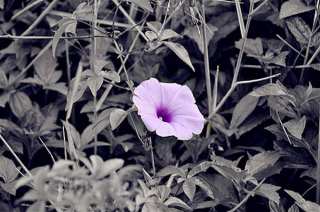
From our point of view as Calibrachoa, the term "annual" is a human label, not our biological destiny. In our native South American habitats, we are tender perennials. We do not possess true winter hardiness and cannot survive freezing temperatures, which is why humans often treat us as disposable summer flowers. However, our internal biological clock does not simply stop; it slows down. Bringing us indoors for the winter is not a fight against our nature but an alignment with it. It is an act of providing the conditions we inherently crave to survive the cold season, allowing us to rest and conserve energy for a vibrant return.
Our most critical requirement for indoor survival is intense, direct light. We are sun-worshippers by nature. A bright windowsill, while a good start, is often insufficient, especially during the short, gloomy days of winter. From our perspective, a south-facing window is the absolute minimum. Without adequate light, our stems become weak and leggy as we desperately stretch, searching for photons. Our flower production, which is our pride, will cease entirely as we enter a state of energy conservation. To truly thrive indoors, you must provide what the winter sun cannot: supplemental lighting. A simple grow light positioned a few inches above our foliage for 12-14 hours a day mimics our ideal summer day, keeping our photosynthetic processes active and our form compact and healthy.
While we need light, we also appreciate a slight seasonal shift. We do not want to be in the same hot, active environment as summer. A cooler room with temperatures between 55-65°F (13-18°C) is ideal. This cooler temperature signals to us that it is time to rest, slowing our metabolism and reducing our water needs. Overwatering in cool, low-light conditions is a primary threat to our roots. You must let the top inch of our soil dry out significantly between waterings. We would much rather be slightly dry than constantly wet, as soggy soil invites root rot, a fatal condition we cannot recover from. A light, occasional misting around our leaves is appreciated to counter dry indoor air, but please avoid wetting our flowers and foliage excessively.
As we transition indoors, a significant but strategic pruning is beneficial. From our perspective, this is not an attack but a helpful reduction of burden. Our long, trailing vines, while beautiful, represent a massive surface area from which we lose moisture. Furthermore, maintaining this extensive growth requires energy we simply cannot produce in indoor conditions. Cutting us back by about one-third to one-half reduces this stress, helps us conserve vital resources, and encourages a bushier, more robust form when active growth resumes in spring. Please use clean, sharp shears to make clean cuts just above a leaf node. This practice minimizes the risk of introducing disease and directs our energy efficiently.