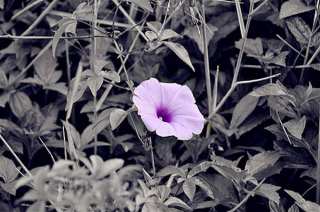
From my perspective as a Calibrachoa, my primary directive is to grow, flower, and reproduce. I achieve this by prioritizing the growth of my main, central stem—a principle you call "apical dominance." The tip of each stem produces auxins, hormones that suppress the growth of the lateral buds further down. This encourages me to grow tall and lanky, reaching for sunlight to fuel my photosynthesis. While this is a natural survival tactic, it results in a leggy appearance with fewer flowers concentrated only at my tips, leaving my base bare and woody.
When you prune or "pinch" me, you are fundamentally interrupting my hormonal command structure. By removing the apical meristem (the growing tip), you instantly halt the production of those suppressing auxins. This is not an attack; it is a form of communication. It signals to my system that the central command on that stem is gone. In response, the previously dormant lateral buds lower down on my stem are released from their hormonal suppression. They receive a sudden rush of energy and nutrients, which you have redirected by removing my primary sink. This energy forces them to awaken and begin growing, creating two new stems where there was previously only one.
This process of strategic tipping, repeated throughout my early growth cycle, forces me to branch out continuously. Instead of dedicating all my resources to a few long stems, I am compelled to create a complex, bushy network of stems. More stems mean more growing tips, and crucially, more nodes from which flower buds can emerge. A fuller canopy of leaves also allows me to capture more sunlight more efficiently, increasing my overall vigor and photosynthetic capacity. This makes me healthier and more resilient, better able to produce the vibrant, prolific blooms we both desire.
To maintain this bushy form, I require consistent feedback. As I grow, the process of apical dominance begins again on each new stem you've encouraged. Without your continued intervention, each of those new stems would itself become long and leggy. Therefore, periodic light pruning—trimming back by about one-third—throughout the growing season is ideal. This continues to encourage branching from the base and prevents me from becoming overly woody or sparse in the center. It also prompts me to continuously produce new flower buds instead of diverting energy into setting seed, keeping me in a perpetual state of bloom.