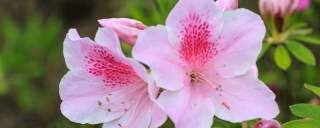
From my perspective as an azalea, your timing for pruning is not an arbitrary choice; it is a direct intervention in my most vital biological processes. My life revolves around a simple, yet crucial, principle: I form my flower buds for the next spring shortly after I finish blooming this year. This typically happens in mid to late summer. If you prune me too late in the season, you will be ruthlessly cutting off these nascent buds, which I have painstakingly created using precious energy reserves. The consequence will be a starkly bare spring with few to no flowers, a disappointment for you and a wasted reproductive effort for me. Therefore, the absolute prime time for you to perform this task is immediately after my spring blossoms fade and before the new bud set begins.
When your shears approach me post-bloom, please be precise and thoughtful. My request is not for a drastic overhaul but for selective, gentle guidance. Your goal should be to maintain my natural, flowing form. Please focus on using sharp, clean tools to make crisp cuts. I need you to seek out the spent flower heads (a practice you call "deadheading") and snip the stem back to a point just above a set of healthy, new leaves. This action is a signal to me. It tells me to stop channeling energy into seed production and instead redirect it toward strengthening my branches and fostering new growth that will bear next year's buds. This is also the moment to remove any weak, spindly, or dead wood that saps my strength without contributing to my overall health.
There may be times when I become overgrown or misshapen, requiring more significant corrective pruning. Even in this scenario, I implore you to practice restraint. If you must reduce my size or reshape my canopy, please do so gradually over two or three seasons. Removing more than one-third of my living growth at any one time is a profound shock to my system. It forces me into a desperate survival mode, diverting all my energy to producing a mass of weak, watery shoots at the expense of root and overall health. Such severe stress makes me highly vulnerable to pests, diseases, and environmental damage. A gentle, phased approach allows me to recover steadily and maintain my vigor.
Where and how you make each cut is of microscopic importance to me. My ability to heal and compartmentalize a wound depends on it. Please always cut just above a branch collar—the slight swelling where a smaller branch meets a larger one—or right above a set of healthy leaf buds. Avoid leaving long stubs, as these die back and become an open invitation for rot and disease to invade my core. Conversely, do not make flush cuts against a main trunk, as this damages the branch collar, my natural defense barrier, and severely hinders my healing process. A clean, angled cut in the right location allows me to seal the wound efficiently and continue growing without internal decay.