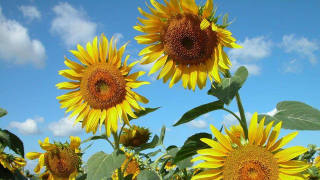
From my roots' perspective, water is everything. It is how I drink and how I transport nutrients from the soil up to my highest leaves and budding head. When my leaves start to turn yellow, it is often a direct cry for help regarding hydration. If the soil is constantly soggy and waterlogged, my roots cannot breathe. They begin to suffocate and rot in the oxygen-deprived environment, a condition you call root rot. With my root system compromised, I cannot absorb water or nutrients, and my leaves signal this distress with a generalized yellowing, often starting with the lower leaves. Conversely, if the soil is bone dry for too long, I become severely dehydrated. The process of transpiration pulls water from my leaves faster than my roots can replace it, causing my foliage to wilt and turn yellow, become crisp, and potentially die. I need deep, consistent watering that allows my roots to access moisture without drowning.
While I am a hardy plant, I am a heavy feeder, especially when preparing to grow my large flower head. The yellowing of my leaves can be a specific message about what I am lacking. A uniform pale yellowing across my older, lower leaves often indicates I am starved for nitrogen (N), a crucial element for chlorophyll and green growth. If the yellowing occurs between the veins of newer leaves, while the veins themselves stay green, I am likely pleading for magnesium (Mg), a central component of the chlorophyll molecule. A lack of other nutrients like iron or sulfur can cause similar chlorosis. The soil around me may simply be exhausted, and I need a balanced, slow-release fertilizer to replenish the nutrients I am desperately trying to draw up.
Not all yellowing is a cause for alarm. As a sunflower, my purpose is to grow, flower, set seed, and complete my life cycle. As my energy focuses intensely on developing my seeds, I begin to strategically withdraw resources from my oldest leaves—those at the bottom of my stalk. These leaves have served their photosynthetic purpose. They will naturally turn yellow, then brown, and finally wither and die. This is a planned process of senescence, not a disease. If the yellowing is confined to these lower leaves and the rest of my foliage and flower head appear vigorous and healthy, this is simply a natural part of my growth and should not be a concern.
Sometimes, the yellowing is a visible symptom of an unseen attack. Microscopic nematodes in the soil can be feeding on my roots, damaging their ability to function and causing yellow, stunted growth. Fungal diseases like verticillium wilt or fusarium wilt invade my vascular system, the very pipes I use to move water. They plug these pathways, causing wilting and yellowing that often starts on one side of a leaf or one side of me. Aphids or spider mites might be sucking the sap directly from the undersides of my leaves, draining me of nutrients and causing a stippled yellow discoloration. In these cases, the yellowing is a battle cry, a sign that I am fighting off an invasion that is compromising my health from within.