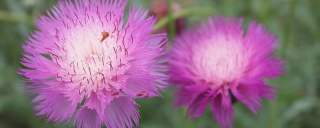
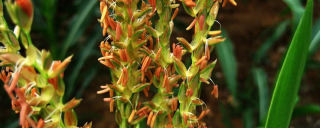
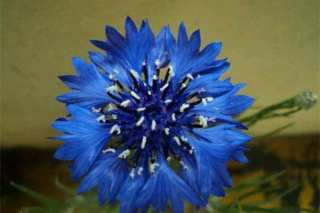
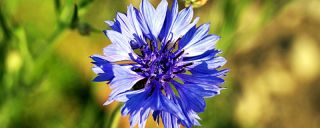
The most critical botanical difference between annual and perennial cornflowers (Centaurea spp.) lies in their life cycle strategy. The annual cornflower, Centaurea cyanus, completes its entire life cycle—germination, growth, flowering, seed production, and death—within a single growing season. It invests its energy into rapid growth and prolific seed production to ensure the next generation. In contrast, perennial species like Centaurea montana are genetically programmed to live for three or more years. They invest significant resources into developing a robust, overwintering structure (like a crown or rhizome) during their first year, allowing them to flower again in subsequent seasons.
This divergent life strategy results in distinct physical structures. Annual cornflowers develop a shallow, fibrous root system sufficient to sustain the plant for one season. Their stems are typically singular or loosely branched and remain non-woody (herbaceous). Perennial cornflowers, however, develop a much more extensive and persistent root system. Many, including Centaurea montana, produce rhizomes—horizontal, underground stems that store energy and allow the plant to spread vegetatively and regenerate new shoots each spring. This gives perennial types a more clump-forming, spreading habit compared to the more upright and ephemeral presence of the annual.
The reproductive tactics of these plants are optimized for their life cycle. The annual cornflower is an opportunist. It blooms profusely and continuously from late spring through summer, producing a massive quantity of seeds to guarantee its genetic legacy. Deadheading (removing spent flowers) can prolong its blooming period as the plant strives to produce more seeds. The perennial cornflower has a different approach. Its bloom period is often more concentrated, typically in late spring to early summer. After flowering, it focuses its energy on replenishing its root and rhizome system for winter survival rather than on relentless seed production. It may have a lighter repeat bloom later in the season.
While both are common in cultivation across the US, their naturalization and hardiness differ. The annual cornflower (Centaurea cyanus) is not native to North America but has naturalized in many areas. It is grown as a cool-season annual throughout the country, tolerating a wide range of climates but unable to survive freezing winters. Perennial cornflowers are defined by their USDA hardiness zones. Centaurea montana, for instance, is winter hardy from zones 3 through 8. This cold tolerance allows it to survive harsh winters and emerge reliably each year, making it a permanent fixture in perennial garden borders within its adapted range.
From a gardener's perspective, these biological differences dictate their use. Annual cornflowers are prized for their fast, reliable show of color, often used in wildflower meadows, cutting gardens, or as fillers in annual beds. They readily self-sow if seeds are allowed to drop. Perennial cornflowers are foundational plants in a mixed border, providing structure and reliable early-season color year after year. They require division every few years to maintain vigor, a process that leverages their rhizomatous growth habit to create new plants.