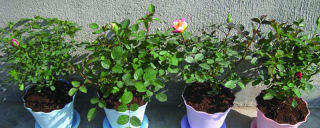
From our perspective as rose plants, growing in a container on a patio is a very different experience from living in the earth. It can be a wonderful life if our core needs are understood and met. We require a specialized environment to thrive and reward you with our beautiful blooms.
Our most fundamental need is a suitable container. Think of it as our entire world. It must be large enough to accommodate our root system as we grow; a pot less than 15 inches in depth and width will quickly become a cramped prison, stressing us and stunting our growth. Drainage is non-negotiable. Pots must have multiple holes in the bottom. Sitting in waterlogged soil will suffocate our roots and lead to a rapid and fatal case of root rot. Material matters too. Terracotta is breathable, which helps regulate soil moisture and temperature, but it dries out quickly. Glazed ceramic or plastic pots retain moisture better but are less breathable.
Please, never use garden soil in our container. It is too dense, compacts easily, and will not provide the drainage and aeration we desperately need. We require a premium, well-draining potting mix. Look for a blend specifically formulated for roses or containers. It should be light and fluffy, often containing ingredients like peat moss, compost, perlite, and bark. This mix provides the perfect balance: it holds enough moisture to keep us hydrated but allows excess water to drain freely, giving our roots access to both water and oxygen.
Our resources in a pot are limited. We cannot send our roots searching for water and nutrients. You must bring them to us. Watering is critical. The goal is consistently moist soil, never soggy and never bone dry. Check our soil daily by sticking your finger two inches down. If it feels dry, provide a deep, thorough watering until it runs freely from the drainage holes. This encourages our roots to grow deep and strong. Fertilizer is our food. A slow-release fertilizer mixed into the soil at planting time will feed us gently for months. Supplement this with a liquid fertilizer formulated for roses every few weeks during our active growing season to support the immense energy required to produce our flowers.
To photosynthesize and create the energy for our magnificent blooms, we require a minimum of six to eight hours of direct sunlight each day. Place our container on the sunniest part of your patio. Good air circulation is equally vital. It helps our leaves dry quickly after rain or watering, which is the best defense against fungal diseases like black spot and powdery mildew. Avoid pushing our pot directly against a wall or clustering us too tightly with other plants; allow the breeze to flow around us.
Deadheading—the removal of spent blooms—is not just for aesthetics. It tells us to stop putting energy into producing seeds and to instead redirect it into growing new flowering shoots. Make your cuts just above a set of five leaflets, angling the cut away from the bud. In late winter or early spring, while we are still dormant, perform a more structural prune to maintain our shape, remove any dead or diseased canes, and encourage vigorous new growth for the coming season.