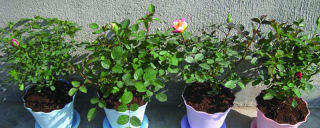
As a potted rose living indoors, my needs are very specific. The confines of my pot limit my world; I cannot send roots out searching for distant nutrients. Therefore, the sustenance you provide is my entire universe. The best fertilizer for me is not a single product, but a regimen that understands my cyclical nature and my unique physical demands.
My existence is built on three primary macronutrients. Nitrogen (N) is fundamental for my vibrant green leaves and strong, pliable canes; it is the engine of my foliage growth. Without it, I become pale and weak. Phosphorus (P) is crucial for my root development and, most importantly, for the energy-intensive process of blooming. It encourages abundant and brilliant flowers. Potassium (K) is my internal regulator, fostering overall vigor, aiding in disease resistance, and helping me manage water uptake and photosynthesis. A fertilizer labeled with a balanced NPK ratio, such as 10-10-10 or 7-9-5, is an excellent foundation.
While I need large amounts of NPK, I also desperately require trace elements that are easily depleted in my limited soil volume. Iron is vital for maintaining the deep green color of my leaves and preventing chlorosis (yellowing between the veins). Magnesium is the central atom in the chlorophyll molecule, making it essential for capturing sunlight. Calcium strengthens my cell walls, providing structural integrity to my entire form and helping prevent issues like bud blast. A high-quality fertilizer designed for roses or flowering plants will include these micronutrients.
My nutritional needs are not constant. In the spring and summer, when sunlight is abundant and I am in my active growth and bloom phase, I am ravenous. This is when I benefit most from regular feeding. A half-strength dose of a liquid fertilizer every two weeks, or a slow-release granular fertilizer applied at the start of the season, provides a steady stream of sustenance. However, in the late fall and winter, my growth slows dramatically. Feeding me during this semi-dormant period can force weak, spindly growth and damage my root system. During these months, I need rest, not food.
The form of fertilizer you choose changes how I receive it. Liquid fertilizers are quickly available to my roots, giving me an immediate boost, but they wash out of the soil rapidly with watering. Slow-release fertilizers (coated prills or spikes) provide a gentle, continuous supply of nutrients over many weeks, which is a steady and safe way to nourish me. Many expert growers use a combination: a slow-release fertilizer mixed into my potting medium at repotting time, supplemented with occasional liquid feedings during peak bloom.
More fertilizer is not always better. An overdose of salts can scorch my tender feeder roots, causing browning leaf edges and overall decline. Please always water me thoroughly before applying fertilizer to protect my roots. Most importantly, observe me. The color of my leaves, the strength of my new growth, and the abundance of my flowers will tell you if your feeding regimen is working. I will show my gratitude for your careful and thoughtful nourishment with a spectacular display of health and beauty.