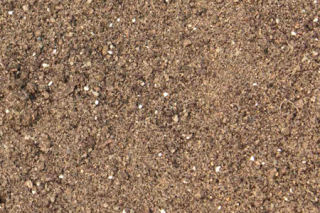
In general, sawdust is often used as garbage after decoration. In fact, sawdust is very useful for us flower breeders. We can turn it into a treasure.
Sawdust as cutting medium of rose, gardenia, pomegranate and other plants, the effect is obvious, far better than soil or water cuttings, and fast rooting, many roots, strong plants. There is a big advantage: after the plant is rooted and survived, the sawdust can be moved into the pot soil together, so as not to hurt the root, easy to grow, and early to see flowers and fruits. Even for azalea, which is difficult to be planted, I have tried to succeed. The tender tip of inch long Begonia can also take root quickly. The reason is that the water retention and air permeability of sawdust are better than that of soil, and oxygen is sufficient.
Specific measures: .
After the sawdust is put into the flowerpot, it is watered several times with boiling water to thoroughly disinfect. After the temperature drops, the excess water in the flowerpot is squeezed out (so that the wet sawdust can't be squeezed out of water by hand), and then cutting can be started. The method is the same as soil cutting. After cutting, keep the sawdust moist and it will take root and survive soon. This method can be implemented in all seasons of the year, but it needs to be placed on the sunny windowsill with heating in the house in winter.

Sawdust is also superior to other matrixes because of its loose texture, controllable drying and humidity. Its root is also faster, safer and has a high survival rate.
Specific method: after the plant is peeled, fill the plastic bag on the package with the matrix formed by mixing wet sawdust and loess, and then tie the two ends tightly.
Using wet sawdust to make fertilizer is nutritious, economical, simple and clean.
Specific method: use wet sawdust and appropriate amount of superphosphate or potassium phosphate or urea and other inorganic fertilizer to mix, organic fertilizer is better to be mixed, put into plastic bag, and fasten the bag mouth. Turn it every two weeks to speed up its uniform maturity. In spring and autumn, it can be used for about six weeks.
Note: 50% soil shall be mixed into the soil.
There are a few points listed above, others are not redundant. In fact, the use of sawdust is not only these, you can use your brain, try it.
(alas, I forgot the important point. Now I'd like to add that the sawdust should be fermented before use.)

The reason why we say "stay" rather than "plant" is that there are often some weeds in our pots that come uninvited and grow luxuriantly. In general, the response of flower friends is to hate the itchy teeth, and then to eliminate them quickly. The so-called "cutting the grass and removing the roots" is the same.
It's not surprising that I use this method. It's because it's often suggested by flower friends that it's difficult to master the scale of watering in winter. Rotten roots, fallen leaves, flowers and little life. Is there any easy way for you to master the scale of watering soon? Yes, please be merciful and leave some weeds in the basin. It's not allowed to cut the grass and root.
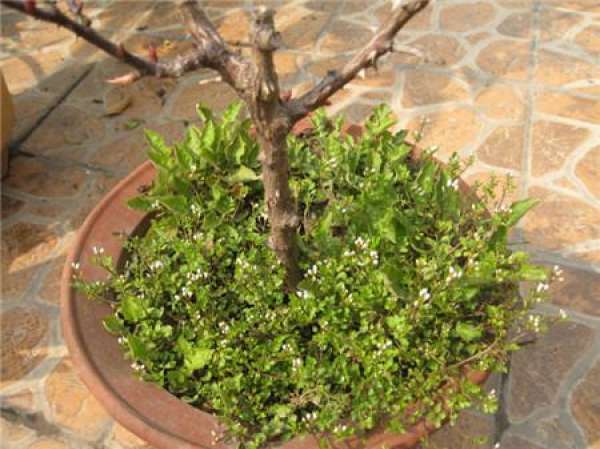
Generally speaking, most kinds of plants are in dormancy or semi dormancy in winter, water supply does not need too much, as long as the soil is slightly moist. A lot of flower friends are always in a hurry to water when they see the soil is white. They think they may have to dry the flowers. In fact, they are not. The soil is white, and the middle is still wet. In this way, it's not surprising that the flowers and trees are not faulty.
Leave some grass in the basin, not all grass. Keep those green grass that stand up against the cold in winter. It's not as good as the more. There are three or five trees.
When should I water it? When should it not be poured? Look at the grass! If the grass is still green, don't pour it; if the grass is dead, pour it immediately. The scale is so simple!
There are more benefits to keep some grass in the basin: cold proof in winter, sun protection in summer, and decoration of the basin surface - what do you want to see in the bare soil? In addition, when loosening the soil, a shovel of grass buried in the soil is green manure, which is enough to compensate for the loss caused by the competition between weeds and potted flowers for fertilizer.
I used this method to water for more than a year, and it never failed. You can try it, too.
Note: 1. Plants that are still blooming and bearing fruit in winter are not included in this case.
2. This method is also applicable in other seasons.
"It's better to eat without meat than to live without bamboo", as was the case in the ancients and the case in the present. Green bamboo is also one of the most important species for modern families to afforest around or in the environment. Planting trees often requires "ten-year trees", while planting bamboo can often create a clear shade and evergreen environment in one or two years. On the night when the moon dissolves, the whirling bamboo shadow is swaying outside the window, which can add infinite interest.
A few poles of bamboo are planted in the basin, and one or two pieces of stone are decorated, which is also the desk love in the hearts of many flower growers.

Bamboo is usually propagated with a whip, and a few are sown with seeds. My reproduction method is rare (taught by my cousin), but the effect is excellent - it's easy and easy to operate, and the survival rate is high. Those who love bamboo may try it .
In the rainy season of early spring, select the mother bamboo with full buds and cut between two sections (i.e. keep a knot in the middle); then fill the two ends of the bamboo tube with moist fine sand, fill and compact, and then seal the two ends of the bamboo tube with clay, which is the first step.
Secondly, choose the loose and permeable sandy loam. According to the thickness of the bamboo tube, dig a ditch about 10 cm deep, lay the treated bamboo tube flat in the ditch and bury the soil, compress it slightly, and then pour it into the water, so it's done. Remember to bury the buds up when you are burying the festival, and cut them up.
About 25-30 days, bamboo nodes can grow buds. If you are a bonsai, you can choose to use it in rainy season.
Key points: .
1. To cultivate bamboo forest, select coarse bamboo, and to cultivate potted plants, select fine varieties.
2. When sawing the bamboo tube, be careful not to crack it, so as not to hurt the bud.
3. When watering, see whether it is dry or wet.
4. After burying, it is better to cover with some bamboo branches or dead grass to block part of the sunshine.
The weather is getting warmer and the atmosphere is warming up. It's a good season for cutting again. Cutting methods are various, generally like soil cutting or water cutting. However, different operation methods and plant varieties make it easy and difficult to root, which makes the survival rate different. In order to properly solve this problem, we like to use NAA and other rooting agents before cutting, which is really effective, and the survival rate of rooting has also been improved. But if the place is remote and the goods are out of stock, what can we do if we can't buy them for a while? Don't worry, wait for me to introduce some local rooting agents to you. You don't need money to buy them, and the effect is no worse than the one you bought - .
As mentioned above, NAA and other rooting agents are actually a kind of rooting hormone, in fact, phosphate fertilizer solution has the same effect. Because "phosphorus" can effectively promote the growth and development of plant cells and tissues, and promote the healing and rooting of plant wounds.
Specific methods: before cutting, first dilute the phosphate fertilizer solution with water, with the proportion of water 7 and fertilizer 3, and then immerse the pre-treatment cuttings (roots) into the fat, with the water part accounting for 1 /3 of the cuttings, take them out after 2-3 hours and wash them with water, and then cut them according to the routine.
Common varieties such as camellia, rose, etc. can take root 10-22 days earlier by cutting with this method. The roots are well developed and grow vigorously.

White sugar solution is also a good rooting agent. It has been tested by many people, and the effect is obvious.
Specific method: first melt the sugar with hot water, the proportion is water 9 sugar 1. After the sugar water is cooled, the cut cuttings can be immersed in it. Take it out for about 40-60 minutes, rinse the incision with clean water, cut part of the incision with a sharp knife, and then cut it as usual.
After the above treatment, the survival rate of the plant is much higher than that of the general cutting. Even the azalea and Camellia which are difficult to root can reach more than 90%.
Willow liquid is a good plant growth agent, its liquid is rich in growth hormone, so it can survive in the direction of insertion and inversion, with strong vitality.
Specific method: take a number of willow branches and leaves, smash the branches with a hammer, and then immerse them in water. After a day, remove the branches and leaves, and the water is willow extract.
The next day you can immerse the cuttings, soak them for about 1 day, (it's ok if the time is longer, the willow sap has the ingredients to inhibit the propagation of bacteria) and then cut them as usual. The roots are fast and many, and the plants grow healthily.