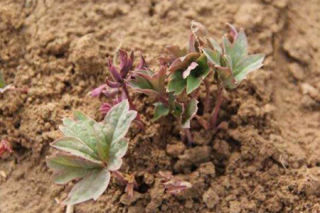
Yam has roots at the lower end, which usually grow horizontally and radially. When it grows to 20 cm, it can extend to the lower soil, and can grow to 60-80 cm deep at most.In addition to the main root, there are many adventitious roots on the surface of its tuber, which can also absorb water and nutrients and play a key role in the growth of the plant.

1. Rhizome: The tuber of yam is long cylindrical, usually growing vertically, up to 1 meter in length.If it is cut off, the section is white.Its above-ground stem is purplish red and has no hair on the surface.

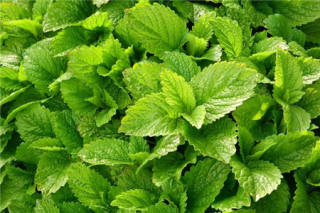
2. Leaves: The leaves of yam are simple, the lower part is mostly alternate, the upper part is opposite, occasionally there will be three-leaf whorl.Seedling leaves are broadly ovate or oval, and vary greatly during growth, usually triangular to broadly ovate, and some are hastate shaped.The leaves are 3-9 cm long and 2-7 cm wide, with a pointed tip and generally 3-lobed.
3. Flowers and fruits: Its flowers are divided into male flowers and female flowers, male inflorescences are 2-8 cm long, relatively erect, usually 2-8 inserted between leaf axils, sometimes arranged into a cone, bracts and petals have purple-brown spots, female inflorescences are generally only 1-3.Its fruit is a capsule, usually oblate, with white powder on the surface and seeds inside.