From my perspective as a Peace Lily (Spathiphyllum spp.), I want nothing more than to flourish and produce my elegant, white flower-like spathes. When I don't, it's not out of stubbornness, but because my fundamental needs aren't being met. Flowering is an energetically expensive process for me, and I will only invest my resources into it when my environment signals that conditions are stable and ideal for reproduction. Here are the most common reasons why I might be holding back my blooms.
This is, by far, the most frequent issue. While I am known for my tolerance of lower light, "tolerance" means I will simply survive, not thrive. To produce flowers, I need to perform photosynthesis at a high rate to create the surplus energy required for blooming. A dim corner might keep my leaves green, but it tells my internal systems that it's not a good time to reproduce. I need bright, indirect light to trigger flowering. Direct sunlight will scorch my leaves, but a nice spot near an east-facing window or a few feet back from a south-facing window is perfect. The light should be strong enough to cast a soft, but defined shadow.
What you feed me—or don't feed me—plays a critical role. If I'm given a fertilizer too high in nitrogen, your focus will be directed almost exclusively toward producing lush, green leaves. Nitrogen promotes vegetative growth, which is great, but it does little to encourage flowering. I require a balanced fertilizer or one with a higher ratio of phosphorus (the middle number in the N-P-K ratio, e.g., 5-10-5) to support the development of my blooms. Conversely, if I am living in the same soil for years without any supplemental feeding, I will eventually deplete the available nutrients. In this state of starvation, I simply lack the basic building blocks to create a flower and will focus on mere survival.
My relationship with my pot is complex. I actually prefer to be somewhat root-bound, as the slight stress of confined roots can sometimes stimulate flowering as a last-ditch effort to reproduce. However, there is a critical point where "somewhat root-bound" becomes "severely pot-bound." When my root system becomes a dense, tangled mass with little room for soil or water, I become severely stressed. I struggle to take up water and nutrients efficiently, and my overall health declines. A plant in survival mode does not have the energy to flower. If you haven't repotted me in several years and I seem stunted, it might be time for a slightly larger home.
My tropical nature means I crave consistent moisture and humidity. While I am dramatic and will wilt to signal thirst, allowing me to reach this point repeatedly is stressful. Each cycle of severe wilting damages my root system and forces me to expend energy on recovery instead of growth and flowering. Similarly, low humidity levels in dry homes can cause stress, making me hesitant to invest in delicate blooms. I thrive in a stable environment where the soil is kept evenly moist (but not soggy) and the air around me has some moisture.
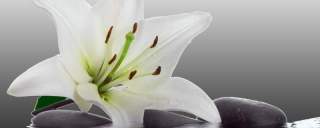
It is important to understand that my beautiful white spathe is not a permanent flower. It has a natural life cycle. After several weeks or even a couple of months, it will naturally start to turn green and then brown. This is a normal process. If this is your only concern, then I am not failing to flower; I am simply completing one cycle before (hopefully) beginning another. Once a flower fades, you can cut the stem off at the base to allow me to redirect my energy.