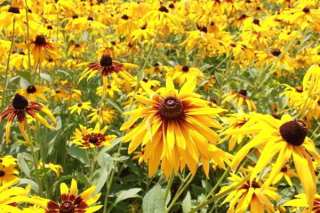
Hello, sunshine lover! It's me, your Coreopsis plant, and I'm thrilled you've chosen to bring me into your garden. I'm known for my cheerful, daisy-like flowers that burst open in shades of yellow, gold, pink, and red, and I promise to be a relatively easy-going companion if you understand my simple needs. Think of this as my personal guide to happiness, straight from my roots to your green thumbs.
First and foremost, I am a sun worshipper. My very name, Coreopsis, even means "bug-like," a reference to the shape of my seeds, but my spirit is all about the light. To thrive and produce the masses of blooms I'm famous for, I need a minimum of six to eight hours of direct, unfiltered sunlight every single day. Please place me in the sunniest spot you have. Without enough light, I'll become leggy, stretching weakly towards the sun, and my flower production will be pitiful. A sunny location keeps my stems strong and my flower show spectacular from early summer right through to fall.
While I appreciate a drink, I despise having wet feet. My roots are susceptible to rot in soggy, poorly drained soil. I'm not picky about soil fertility; in fact, I prefer it to be on the poorer, well-draining side. Sandy or loamy soil is perfect for me. When you water me, please do so deeply but infrequently, allowing the top inch or two of soil to dry out completely between waterings. Once I'm established, I am quite drought-tolerant. Overwatering is a far greater danger to me than underwatering. A little tough love with the hose will make me stronger and encourage my roots to grow deeper in search of moisture.
You might think that feeding me a lot will give you more flowers, but the opposite is often true. I am not a heavy feeder. Rich soil or too much fertilizer, especially high-nitrogen formulas, will encourage an abundance of leafy green growth at the expense of my beautiful blooms. If you feel I need a little boost, a light application of a balanced, slow-release fertilizer in early spring is more than sufficient. Often, I can get by with just the nutrients already present in decent garden soil. Remember, I'm a wildflower at heart, and I'm accustomed to thriving without much coddling.
This is the most important trick to keep me blooming all season long. As my flowers begin to fade and wilt, they start putting energy into producing seeds. If you snip or pinch off these spent flowers just below the bloom head, you signal to me that my job isn't done. I'll immediately redirect my energy into producing a whole new set of flower buds to try again. Regular deadheading will keep me looking tidy and covered in color. For a larger planting, you can even use garden shears to give the whole plant a "haircut" by cutting it back by about one-quarter to one-third after a major flush of blooms has faded.
Every two to three years, in either early spring or early fall, you might notice that my center is becoming woody and less productive. This is the perfect time to lift me gently from the ground with a shovel and divide my root clump into several smaller sections. Replant these divisions to rejuvenate me and create new plants for other sunny spots in your garden. As for pests, I'm generally trouble-free, but keep an eye out for aphids, which can be sprayed off with a strong stream of water, or powdery mildew, which is best prevented by ensuring I have good air circulation around my leaves.