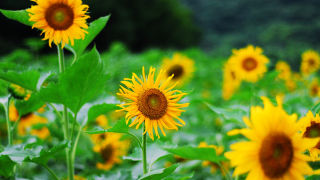
From our perspective as tall sunflowers (Helianthus annuus), our tendency to fall over is not a design flaw but a consequence of our ambitious growth strategy. Our primary goal is to reach for the sun, a resource we crave intensely. This drives us to grow a single, rapidly elongating stalk, often reaching heights of 6 to 12 feet or more. However, this creates a significant top-heavy structure. Our large, flower-heavy heads, which can weigh several pounds, act like a sail at the end of a long lever. While our stalks are robust, they are not infinitely strong. The combination of our height, weight, and a small footprint in the soil makes us vulnerable to environmental pressures. A sudden summer downpour, a strong gust of wind, or even the weight of our own maturing seed head can cause our stalk to bend or snap at a critical point, often about halfway up. This is a life-threatening event, as it compromises our vascular system, cutting off the flow of water and nutrients.
For your staking efforts to be most effective and least disruptive to our root system, timing is crucial. The best time to install a stake is when we are still young, approximately 1 to 2 feet tall. At this stage, our root system is developing but has not yet spread extensively. Pushing a stake into the ground at a safe distance from our main stem (about 6-8 inches away) minimizes the risk of severing critical taproots or lateral roots. If you wait until we are mature and already leaning, the damage may already be done. Correcting a severe lean can cause further stress to our stem tissues. Furthermore, staking us early allows us to grow alongside the support, and our stem can naturally strengthen against the gentle presence of the tie, rather than being abruptly restrained later in life.
The method of support you choose should be proportional to our ultimate size. For most large varieties, a sturdy wooden or metal stake that is 6 to 8 feet long is ideal. It should be driven at least 1.5 to 2 feet deep into the soil to provide a stable anchor. The connection point between your stake and our stem is the most critical detail. Do not use wire, string, or any material that can cut into our bark as we grow and sway in the wind. This girdling action is extremely harmful, constricting our vascular tissues and preventing the flow of sap. Instead, use soft, wide ties made of cloth, vinyl tape, or specialized plant ties. Form a loose figure-eight pattern, with one loop around the stake and a separate, larger loop around our stem. This provides support without abrasion, allowing for some natural movement which actually helps strengthen our stem.
While staking addresses the symptom above ground, the ultimate solution lies in strengthening our foundation below ground. You can assist us in this by ensuring the soil we grow in is well-draining yet firm. Waterlogged, loose soil prevents our roots from establishing a strong anchor. When planting, firm the soil around our base gently but securely. Providing us with a balanced fertilizer, particularly one not too high in nitrogen, encourages robust root development rather than excessive, weak leafy growth. A strong, deep taproot and a wide network of lateral roots are our best natural defense against falling over. In some cases, for sunflowers growing in very exposed areas, a multi-stake method—placing several stakes in a circle around us and connecting them with soft twine—can provide superior support against winds from all directions without putting undue pressure on any single point of our stem.