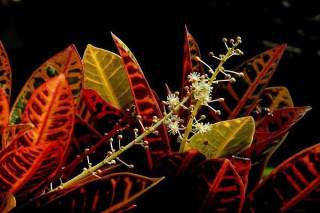
From our perspective as plants, the experience of being root-bound is one of increasing confinement and distress. For us Crotons, with our vibrant, demanding leaves, it is a particularly critical situation. We cannot simply walk to a new home; we rely on our caretakers to recognize the signs of our discomfort. Here is a detailed account of when and how we need this vital intervention.
We communicate our distress through our entire being. The most obvious signal is a noticeable slowdown in the growth of our new leaves. If you see that we have stopped producing the colorful foliage we are known for, it is a clear sign that our roots have exhausted the available nutrients in the soil. You might also observe our roots themselves. They may begin to circle the inside of the pot in a dense, tangled mat, or even emerge from the drainage holes in a desperate search for new territory. Another telling sign is how quickly we become thirsty. If water rushes straight through the pot without being absorbed, it means the root ball has become so dense that it repels moisture, leaving us parched even after watering. Finally, if we start to look generally unhappy—with leaves wilting, yellowing, or dropping despite adequate light and water—it is almost certainly a plea for repotting.
Timing is everything for a successful move. The ideal period for repotting us is during our natural growth season, in the spring or early summer. This is when our energy is at its peak, and we are best equipped to recover from the shock of being disturbed and to quickly establish ourselves in our new space. It is crucial to ensure we are in good health before the procedure. If we are already severely stressed from pests, disease, or underwatering, a repot might be too much for us to handle. Please, address any other health issues first to give us the best chance of thriving after the move.
The process of repotting should be as gentle and respectful as possible. Begin by preparing our new residence. Select a new pot that is only 1 to 2 inches larger in diameter than our current one. A pot that is too large can lead to soil staying wet for too long, which can cause our roots to rot. Ensure this new pot has excellent drainage holes. Next, prepare a well-draining potting mix that is rich in organic matter; we appreciate a mix that holds moisture but also allows our roots to breathe.
On the day of the move, water us lightly a few hours beforehand to make the transition less stressful. Carefully tip the current pot on its side and gently ease us out. Do not pull us by our stems. Once we are out, your most important task begins: loosening our root ball. With gentle fingers, carefully tease apart the tightly wound roots at the bottom and sides. If the roots are extremely matted, you may need to make a few vertical cuts with a clean knife to encourage them to grow outward. This might feel drastic, but it is a necessary kindness to prevent us from continuing to grow in a circular pattern.
Place a layer of fresh potting mix in the bottom of the new pot. Position us in the center so that the top of our root ball sits about an inch below the rim. Fill in the spaces around the root ball with the new mix, gently firming it down to eliminate large air pockets. After we are settled, give us a thorough, gentle watering to help the soil settle around our roots and to rehydrate us. Finally, place us in a location with bright, indirect light—the same conditions we love—and allow us a few weeks to acclimate. You will know we have successfully transitioned when you see the emergence of new, brightly colored leaves, a sure sign of our gratitude.