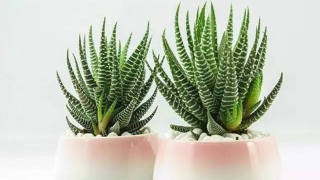
From my perspective as a Haworthia, I cannot speak in your human language, but if I could, I would tell you that my needs are simple. I am built for survival in arid, sun-scorched environments. When you love me a little too much with your watering can, you disrupt the delicate balance I depend on. Here is what I experience when I am overwatered and how you can help me recover.
You cannot see this, but it is the most critical problem. My roots need oxygen as much as they need water. When the soil is perpetually wet, the air pockets between the soil particles fill with water. My roots begin to suffocate and cannot function. They become soft, mushy, and turn brown or black—a condition you call root rot. Once this rot sets in, the roots can no longer absorb water or nutrients, creating a cruel irony: I am sitting in water, yet I am dying of thirst. The rot is also an open invitation for soil-borne fungi and bacteria to attack, speeding up my decline.
If you pay close attention to my leaves, I will show you clear signs of distress. A healthy Haworthia like me has plump, firm leaves that are filled with water-storing tissue. When overwatered, these leaves become soft, squishy, and translucent. You might notice them turning a pale yellow or even a dark, almost black, color. This is because the cells in my leaves are literally bursting from too much water. Instead of being resilient reservoirs, they become waterlogged and start to die. If you gently squeeze a leaf and it feels like a water-filled balloon that doesn't spring back, you are overwatering me.
As the root rot progresses and the leaves become compromised, my entire structural integrity is at risk. The base of my plant, where the stem is, may become soft and mushy. You might see my leaves starting to droop dramatically or fall off with the slightest touch. In severe cases, the center of my rosette may turn black and collapse inward. This is a very advanced stage of rot, and it means the core of my being is severely damaged. At this point, saving me becomes much more difficult.
If you see these signs, please act quickly. I want to live!
Gently remove me from my pot. Shake off all the wet soil so you can see my roots clearly. This is like a medical examination. Healthy roots will be firm and white or tan. Rotten roots will be dark, slimy, and fall apart easily.
Using a clean, sharp pair of scissors or pruning shears, carefully cut away all the rotten roots and any leaves that are mushy or blackened. Do not be hesitant; it is better to remove all the rot than to leave any behind. This stops the infection from spreading. After the surgery, let my roots and the base of my plant air dry in a shady, well-ventilated spot for at least 24 to 48 hours. This allows the cuts to callous over, which is crucial to prevent new infection when I am repotted.
Do not put me back into the old, contaminated soil. Prepare a new pot that has excellent drainage holes—this is non-negotiable. Use a fresh, fast-draining succulent or cactus mix. You can make it even better by adding extra perlite or pumice to increase aeration. Repot me gently into this dry new mix.
This is the most important step for my recovery: **do not water me immediately**. I have just undergone major surgery and need time to heal. Wait at least a week, or even longer, before giving me the slightest drink. This waiting period encourages my remaining healthy roots to start searching for moisture, promoting new root growth. When you do resume watering, please adopt the "soak and dry" method: water thoroughly only when the soil is completely dry, and never let me sit in a saucer of water.