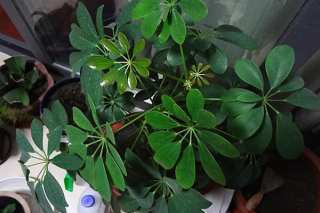
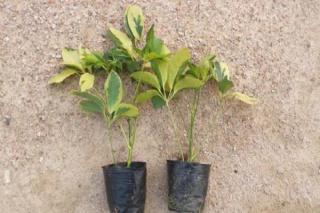
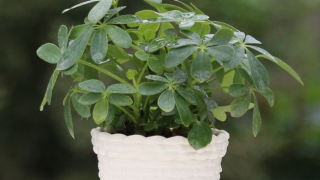
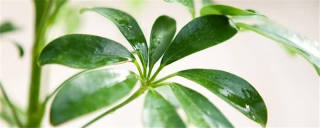
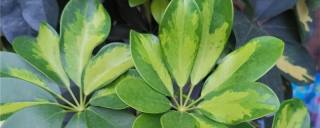
To understand the ideal conditions for a Schefflera, often called an Umbrella Tree, one must first consider its origins. Most common houseplant varieties, like Schefflera arboricola, are native to the subtropical forests of Taiwan and Hainan. In this habitat, they thrive as understory plants beneath the canopy of larger trees. This environment provides a crucial clue: they are accustomed to consistent warmth, high humidity, and bright, but filtered, light. Replicating these conditions as closely as possible within a home is the key to promoting vigorous growth, lush foliage, and overall plant health. Straying too far from these native conditions will trigger stress responses from the plant, signaling that its environment is not ideal.
From the plant's physiological perspective, temperature governs the rate of metabolic processes like photosynthesis and respiration. Scheffleras perform best in a consistently warm temperature range of **18°C to 24°C (65°F to 75°F)**. Within this band, the enzymes responsible for growth and energy production operate at peak efficiency. It is crucial to avoid sudden temperature fluctuations. Drafts from doors, windows, or air conditioning vents can cause chilling stress, leading to leaf drop. Similarly, placing the plant near a radiator or fireplace can create a localized hotspot, scorching the leaves and drying out the soil too rapidly. At night, a slight drop in temperature is natural and acceptable, but temperatures should not consistently fall below **13°C (55°F)**, as cold damage can cause blackening leaves and stunted growth.
Humidity, or the amount of water vapor in the air, is arguably even more critical than temperature for a Schefflera. In its native humid environment, the plant's leaves readily absorb moisture from the air. In the dry air typical of most homes, especially during winter when heating systems are running, the plant faces a significant challenge. Low humidity forces the plant to lose water through its leaves (transpiration) faster than its roots can absorb it. This leads to a defensive reaction: the plant will often curl its leaflet edges inward to reduce surface area and water loss. If the condition persists, the leaf tips and edges will turn crispy and brown. Therefore, the ideal humidity level for a Schefflera is **60% or higher**.
When humidity is too low, the plant's stomata (pores on the leaves) begin to close to conserve water. While this is a necessary survival tactic, it also hinders the plant's ability to "breathe" and take in carbon dioxide for photosynthesis. The result is slowed growth and the aforementioned browning. To assist your Schefflera, you can mimic its preferred humid environment. Grouping plants together creates a microclimate with higher humidity as they collectively release moisture. Placing the plant's pot on a pebble tray filled with water (ensuring the pot sits above the water line) provides constant evaporation around the foliage. For the most effective solution, especially in very dry climates, using a room humidifier nearby will provide the consistent, elevated humidity the plant craves without wetting the leaves, which can invite fungal diseases.
A plant's needs cannot be viewed in isolation. The ideal temperature and humidity work in concert with light and watering. A Schefflera placed in a brighter spot will photosynthesize more actively, potentially enjoying slightly warmer temperatures and requiring more frequent watering. However, higher temperatures and increased light without a corresponding increase in humidity will accelerate moisture loss. Conversely, a plant in a cooler, lower-light location will use water more slowly and will be more susceptible to root rot if overwatered. The goal is to find a stable balance where warmth, moisture in the air, light intensity, and soil moisture create a harmonious environment that allows the Schefflera to focus its energy on growth rather than survival.