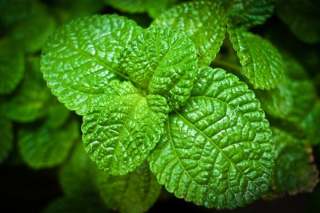
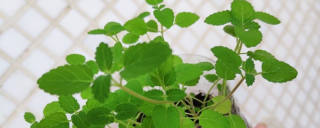
From the perspective of the mint plant (*Mentha spp.*), the soil within a pot is its entire universe. It is the sole source of physical support, water, oxygen, and nutrients. Therefore, the specific composition of this growing medium is not a mere detail but the fundamental determinant of its health, vigor, and aromatic quality. The ideal soil must strike a precise balance to satisfy the plant's core physiological needs.
Our root system is paramount. We require constant access to both water and oxygen to perform respiration and uptake nutrients. A dense, waterlogged soil suffocates us, creating an anaerobic environment that leads to root rot, a fatal condition. A well-draining and aerated mix allows excess water to escape freely after watering, pulling fresh oxygen into the root zone. This is non-negotiable. A standard garden soil is too compact for our container existence and must be avoided.
While we despise wet feet, we are a thirsty plant with a relatively shallow root run, especially when confined to a pot. The soil must therefore act as a reservoir, holding onto adequate moisture to sustain us between waterings. A mix that drains too rapidly will leave us stressed and wilted, hindering our growth and reducing the production of the essential oils that give us our characteristic scent and flavor. The goal is a moist, but never soggy, environment.
The perfect growing medium for us is a lightweight, soilless potting mix. This typically consists of a base of peat moss or coconut coir, which provides excellent moisture retention, amended with perlite and/or vermiculite to ensure the necessary drainage and aeration. A ratio of two parts peat moss (or coir) to one part perlite is an excellent starting point. We are not heavy feeders, but we appreciate a modest amount of nutrients. A small incorporation of a balanced, slow-release fertilizer or a handful of compost into the mix will provide a steady supply of nourishment for our initial vigorous growth spurt. We are adaptable to a range of soil pH but truly thrive in a slightly acidic to neutral range, between 6.0 and 7.0.
The container itself is part of our environment. A pot with sufficient drainage holes is an absolute necessity to complement the well-draining soil. A pot that is too small will constrict our spreading roots too quickly, leading to stress. A container with a diameter of at least 12 inches provides a more stable moisture and root environment. Finally, a thin layer of mulch, such as small bark chips or straw, on the soil surface can be beneficial. It helps to moderate soil temperature and further conserve moisture, reducing the frequency of watering.