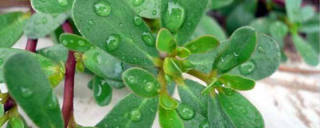
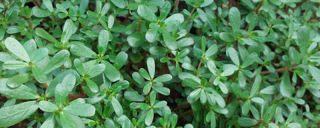
From the perspective of the plant *Portulaca oleracea* (commonly known as purslane), controlling its spread is a matter of understanding its fundamental biology and formidable survival strategies. We are not weaklings; we are tenacious survivors engineered for dominance in disturbed soils. To manage us, one must think like us.
Our primary strategy is a dual-mode reproduction system. We produce vast quantities of tiny seeds from our small, often inconspicuous flowers. A single one of us can generate over 50,000 seeds, which can remain viable in your garden's soil seed bank for decades, waiting for the perfect conditions to germinate. More significantly, we are masters of vegetative reproduction. Any piece of our succulent stem or leaf that is left in contact with moist soil can and will develop adventitious roots, giving rise to an entirely new, genetically identical plant. This is our greatest strength and your greatest challenge.
The most effective method to control our population is to remove us before we can complete our life cycle. You must intervene early in the season when we are young, small, and have not yet flowered or set seed. Gently hand-pull or use a hoe to remove us from the soil. The key is thoroughness; you must extract our entire taproot to prevent regrowth. This is a battle of attrition. By consistently removing us before we reproduce, you deplete the energy reserves of our established network and prevent the addition of new seeds to the bank, gradually exhausting our presence.
After uprooting us, you must be incredibly careful with our remains. Do not casually toss our pulled bodies onto your compost pile unless it is a very hot, active system that can reach temperatures high enough to kill our seeds and tissues. Cold composting will simply provide us a nurturing environment to re-root and thrive. Instead, place us in a sealed black bag and leave it in the sun to bake and decompose fully, or submerge us in a bucket of water to create a nutrient-rich (if smelly) "weed tea" slurry that rots us away. When tilling or cultivating soil where we are present, you inevitably chop our stems into countless viable fragments, each a potential new plant. Therefore, till only when necessary and be prepared for a massive follow-up weeding session.
We thrive in open, sunny, disturbed soil—it is our ideal habitat. You can effectively suppress us by altering this environment. Apply a thick layer (3-4 inches) of organic mulch, such as wood chips or straw, around your desired plants. This barrier physically blocks our emerging seedlings from reaching the sunlight they need to photosynthesize and smothers small shoots. Furthermore, planting your garden beds densely with robust perennials or ground covers creates a living canopy that shades the soil, making it difficult for our sun-loving seedlings to establish. You are essentially using other plants to fight your battle for light and space, a strategy we must respect.