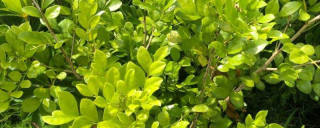
To understand my winter survival, you must first know my origins. I, *Origanum vulgare* subsp. *hirtum*, am a perennial herb native to the rocky, sun-drenched hills of the Mediterranean. My very essence is built for hot, dry summers and mild, wet winters. My small, hairy leaves are not just aromatic; they are an evolutionary adaptation to conserve water and protect my vital cellular structures from intense sun and, to a degree, from cold desiccation. My growth habit is low and spreading, helping me stay close to the warmth of the earth and avoid the worst of the biting winds. My internal processes slow dramatically as temperatures drop, a state of dormancy that is key to my survival.
Humans use the USDA Plant Hardiness Zone Map to translate my cold tolerance into a practical guide. This map divides regions based on the average annual extreme minimum winter temperature. For me, Greek Oregano, I am generally classified as hardy from Zones 5 through 9. This numerical range is critical. In Zone 5, winters can plunge to -20 to -10°F (-29 to -23°C). My survival here is possible, but not guaranteed, and heavily dependent on protective measures. In my ideal zones (6-8), winter lows typically range from -10°F to 20°F (-23°C to -7°C), conditions under which I can reliably survive with minimal assistance. Zone 9 winters are very mild, posing little threat to my root system.
The zone number alone is not the full story. For a Mediterranean plant like me, the condition of winter is often more lethal than the temperature itself. My greatest enemy is not cold air, but cold *wetness*. Saturated, frozen soil around my roots is a death sentence. It causes root rot and heaving, where freeze-thaw cycles physically push my root crown out of the ground, exposing it to fatal freezing and drying. A well-draining soil is my best defense. A blanket of snow is actually a fantastic insulator, protecting me from extreme temperature fluctuations and drying winds. A cold, dry winter in Zone 5 can be far less damaging than a wet, slushy winter in Zone 7.
As autumn progresses and daylight wanes, I receive signals to prepare for dormancy. I cease active growth and divert my energy downward into my roots and crown, where my life force is stored. The top growth—the stems and leaves you harvest—will likely die back, turning brown and brittle. This is a normal and necessary process. Do not be alarmed. This dead foliage can even act as a protective mulch for my crown. My living essence remains dormant underground, waiting for the consistent warmth and longer days of spring to trigger a new burst of growth from the base. Your patience is required, as I may be one of the later herbs to reappear in the garden.