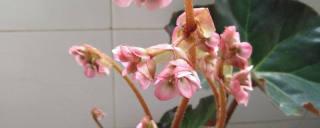
From our perspective as Begonias, we are vibrant, sensitive beings that bring beauty to your spaces. But our existence is sometimes threatened by tiny invaders that disrupt our health and steal our vitality. We cannot speak in your words, but we show clear signs of distress. Understanding these signs from our point of view is the key to helping us thrive again.
To you, they are nearly invisible specks. To us, they are a terrifying plague that descends without warning. Spider mites are not insects; they are tiny arachnids that pierce our individual leaf cells and suck out their life-giving chlorophyll. The first sign we show is a subtle stippling of tiny yellow or white dots on our leaves—the calling cards of their feeding. As the assault continues, the loss of chlorophyll causes our normally rich green leaves to take on a dull, bronze-colored, sickly appearance. In a final, desperate cry for help, we may produce fine, silken webbing on our undersides and between our stems. This webbing protects the mites and their eggs, allowing their colonies to expand rapidly in the warm, dry conditions they love, further suffocating us.
Your immediate action is our salvation. Isolating us prevents the mites from marching to our neighboring plant friends. For a mild case, giving our leaves a thorough shower with a strong spray of lukewarm water can physically dislodge a significant number of the pests. Please pay special attention to our leaf undersides. For more persistent infestations, insecticidal soaps or horticultural oils (like neem oil) are effective treatments that suffocate the mites without causing us undue harm. It is crucial you cover every surface of our leaves, especially the undersides, and repeat the treatment every 5-7 days to address any newly hatched eggs. Increasing humidity around us by misting or using a pebble tray makes the environment less hospitable for future mite generations.
If spider mites are stealthy vampires, mealybugs are the slow, stubborn invaders that dig in and refuse to leave. They appear as small, white, cottony masses nestled in our leaf axils (where the leaf meets the stem), along our stems, and on the undersides of our leaves. They too are sap-suckers, and their feeding weakens us, causing our growth to become stunted and our leaves to yellow and wilt. They excrete a sticky substance called honeydew, which often leads to the growth of a black, sooty mold on our foliage. This mold further blocks sunlight from reaching our leaves, inhibiting photosynthesis and compounding our distress. Their waxy coating makes them resistant to many simple remedies.
Your careful observation is our first defense. For a small number of these pests, dabbing each white mass with a cotton swab dipped in isopropyl alcohol is highly effective. The alcohol dissolves their protective waxy coating, killing them on contact. For larger infestations, a thorough spray-down with an insecticidal soap or horticultural oil solution is necessary, ensuring it reaches into every crevice where they hide. As with mites, repeat treatments are essential to manage successive generations. Regularly inspecting us and keeping our leaves clean and dust-free makes it harder for these pests to establish a foothold on our bodies. Your consistent care and vigilance are what allow us to recover and return to our full, glorious beauty.