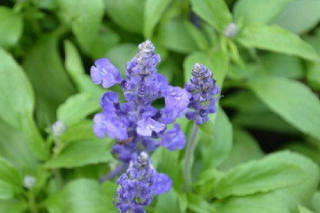
From our point of view, water is life, but it is also a delicate dance. We sage plants (Salvia officinalis) hail from the dry, rocky hills of the Mediterranean. Our very essence is built for resilience in the face of sun and thirst. Our roots are designed to seek out moisture in well-drained, gritty soil, and they absolutely despise sitting in constant dampness. When you pour too much water into our pot, you are fundamentally contradicting our evolutionary design. You are flooding our home, and our roots, which need to breathe air from the soil pockets, begin to suffocate and rot. Conversely, while we are drought-tolerant, we are not cacti. There is a limit to our patience. When you forget about us for too long, our internal systems begin to shut down, desperately conserving the last drops of moisture we hold.
When you over-love us with water, we have no choice but to show you our distress. The first sign is often a general wilting and drooping of our leaves. This is confusing because we also wilt when thirsty, but the key difference is the soil's feel—it will be cold and wet to the touch. Our leaves, once a vibrant silvery-green, will turn a pale, sickly yellow, often starting with the older leaves lower down. They will feel soft and limp, like wet paper. The most damning evidence is the stem. If the base of our stem near the soil feels mushy and soft, or if you detect a foul, rotten smell from the soil, it means our roots are drowning and decaying. This root rot is a serious crisis for us.
When you underwater us, our protest is more direct. We begin to conserve every last molecule of water. Our leaves will also wilt, but they will feel dry, brittle, and crispy to the touch, not soft. They may curl inward at the edges to reduce surface area and minimize moisture loss. The color will change as well, but instead of yellowing, we will turn a dull, dry brown, particularly at the tips and edges of our leaves. The soil will pull away from the edges of the pot, and it will feel dust-dry deep into the pot, not just on the surface. Our growth will completely stall, as we lack the basic resource needed to produce new stems and leaves.
If you suspect overwatering, you must act quickly. Immediately stop watering and move us to a warm, airy spot with good air circulation to help the soil dry out. If the soil is sodden, the best course of action is to gently remove us from the pot. Inspect our roots—healthy ones are firm and white. Using sterile shears, carefully trim away any dark, mushy, rotten roots. Repot us into fresh, dry, well-draining potting mix ( ideally amended with sand or perlite) and a pot with excellent drainage holes. Do not water again until the top inch of soil is completely dry.
If you have underwatered us, the solution is simpler but requires care. Do not flood us in a panic; this causes shock. Instead, place our entire pot in a basin of room-temperature water for about 20-30 minutes, allowing the soil to soak up moisture from the bottom up until the topsoil feels damp. Then, remove the pot, let it drain thoroughly, and return it to its sunny spot. Going forward, establish a routine of checking our soil moisture by sticking your finger an inch into the soil. Water us deeply only when that inch is dry, and always allow excess water to drain away completely.