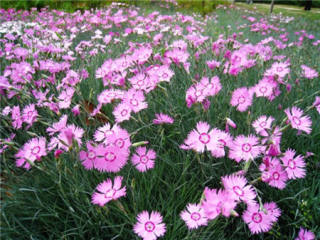
Carnations (Dianthus caryophyllus), from a plant's perspective, originate from the dry, sunny, and well-ventilated regions of the Mediterranean. Our evolutionary history has equipped us with specific physiological traits to thrive in these conditions. We possess narrow, often glaucous (grey-green) leaves that are adept at minimizing water loss through transpiration. Our roots prefer a medium that drains exceptionally well, never remaining soggy. Consequently, our relationship with atmospheric humidity is fundamentally different from that of tropical houseplants like Monsteras or Ferns. High humidity is not a necessity for us; in fact, it can be detrimental to our health.
For carnations, excellent air circulation is far more crucial than high humidity. Stagnant, moist air around our foliage creates an ideal environment for fungal pathogens, such as Botrytis (gray mold) and powdery mildew, to establish themselves. These diseases can quickly disfigure our leaves and flowers, leading to rot and a decline in overall health. Good airflow helps to keep the microclimate around our leaves dry, ensuring that any moisture from watering or misting evaporates promptly. This prevents spores from germinating and protects our cellular integrity, allowing for efficient gas exchange without the risk of infection.
Increasing humidity around carnations introduces several direct risks. As previously mentioned, fungal growth is the primary concern. Furthermore, consistently high moisture levels on our petals can cause them to become spotted or to rot prematurely, significantly shortening the vase life of cut flowers and the blooming period on the plant. High humidity also exacerbates any issues with overwatering at the root zone. If our roots are already struggling in damp soil, a humid environment hinders the plant's ability to transpire and pull water up through its system, potentially leading to root rot, a severe and often fatal condition.
To ensure a potted carnation thrives indoors, focus on replicating its preferred dryland conditions rather than increasing humidity. Provide us with several hours of direct sunlight daily, as strong light helps keep the plant robust and its foliage dry. Plant us in a very well-draining potting mix, perhaps amended with perlite or coarse sand to enhance drainage. Water us deeply but infrequently, allowing the top inch of soil to dry out completely between waterings. Most importantly, ensure we are situated in a room with good natural air movement or use a small fan to gently circulate air, which is far more beneficial than any measure to raise humidity levels.