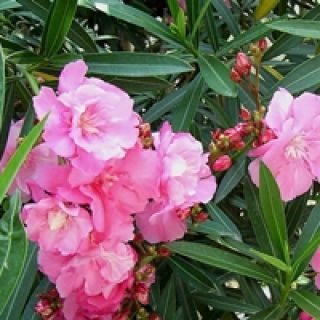
No, oleanders (Nerium oleander) are not native to the United States. From a botanical and evolutionary perspective, the genus Nerium is indigenous to a broad region spanning the Mediterranean Basin, parts of the Middle East, and into areas of Southern Asia. This plant evolved in these specific Old World ecosystems, developing traits suited to the climate and soils of those regions. Its natural distribution includes countries surrounding the Mediterranean Sea, such as Spain, Morocco, Greece, and Italy, as well as regions in Saudi Arabia and parts of China. Any oleander found growing in the wild in the US is a descendant of cultivated plants that have escaped gardens and landscapes, not a member of a native population.
Oleanders possess several biological traits that contribute to their potential invasiveness in non-native regions like the southern United States. They are exceptionally drought-tolerant and heat-resistant shrubs, thriving in USDA hardiness zones 8 through 10, which encompass much of the Sun Belt. The plant is a prolific seed producer; its long, bean-like seed pods split open to release numerous plumed seeds that are easily dispersed by wind and water, facilitating colonization of new areas away from the parent plant. Furthermore, oleanders spread vigorously through vegetative means, sending up suckers from their root systems to form dense, monotypic thickets that can outcompete surrounding native vegetation for space, water, and nutrients.
While not classified as aggressively invasive in the same manner as plants like kudzu or Brazilian pepper, oleander is naturalized in many parts of the southwestern US, Florida, and other southern states. It is frequently found along waterways, disturbed areas, and roadsides where it has escaped cultivation. Its designation as a problematic invasive species varies by state and local jurisdiction. The primary ecological concern is its ability to form dense stands that displace native flora, thereby altering habitat structure for local wildlife. Its extreme toxicity also presents a unique ecological consideration; all parts of the plant contain potent cardiac glycosides, which can be lethal if ingested by mammals, including livestock, pets, and native herbivores, though it is typically avoided due to its bitter taste.
Oleander remains a popular ornamental plant due to its showy, long-lasting blooms, evergreen foliage, and remarkable ability to thrive in challenging urban conditions, including poor soil, air pollution, and reflected heat. For gardeners and landscapers in its adapted zones, the plant offers significant aesthetic benefits. However, from an environmental stewardship perspective, its use requires careful consideration. Planting should be avoided in areas immediately adjacent to natural preserves, waterways, or wildlands where seed dispersal is a significant risk. Responsible cultivation involves managing its growth by regularly deadheading spent flowers to prevent seed pod formation and promptly removing any root suckers that appear outside the desired planting area to control its spread.