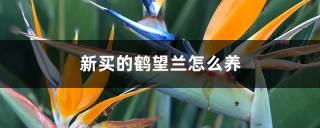
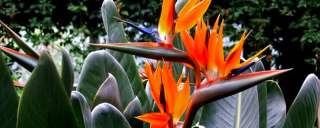
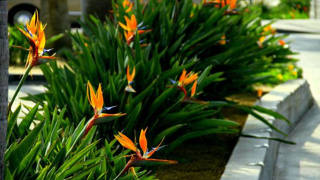
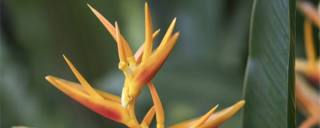
To understand the ideal conditions for a Strelitzia, commonly known as the Bird of Paradise, one must consider its native environment. Originating from the coastal forests of South Africa, this plant is not a denizen of dark, humid jungles but rather thrives in bright, warm, and well-ventilated spaces. Providing conditions that mimic this habitat is key to fostering robust growth and, ultimately, its spectacular blooms.
Strelitzia plants are warmth-loving and prefer a consistent temperature range that mirrors a mild spring or summer day. The ideal temperature for promoting healthy growth and photosynthesis is between **65°F and 85°F (18°C - 29°C)**. Within this range, the plant's metabolic processes function optimally, allowing for the efficient production of energy for leaf, stem, and flower development. It is crucial to note that these plants are highly sensitive to cold. Temperatures dipping below **50°F (10°C)** can cause significant damage to the cell structure of the leaves, leading to blackening, wilting, and potentially killing the plant if exposed for prolonged periods. Furthermore, while they enjoy warmth, they do not appreciate extreme, dry heat from sources like radiators or heating vents, which can scorch leaves and dehydrate the plant.
Contrary to popular belief, the Bird of Paradise does not require the excessively high humidity of a tropical rainforest. It adapts well to the humidity levels found in most average homes, typically between **40% and 60%**. This moderate humidity level helps the plant regulate its transpiration (water loss through leaves) without putting undue stress on its system. However, when indoor air becomes too dry, especially during winter when heating systems are active, humidity can plummet below 40%. In such conditions, the plant may respond by developing brown, crispy leaf tips and edges—a clear sign of moisture stress. While it can tolerate average air moisture, providing a boost in humidity will result in lusher, healthier foliage.
These three environmental factors are intrinsically linked and must be considered together. High light levels increase the plant's internal temperature and its rate of transpiration. Therefore, a Strelitzia placed in a very sunny, warm spot will have a higher demand for water to compensate for moisture loss and may appreciate slightly higher humidity to reduce stress. Conversely, a plant in a cooler, lower-light location will use water more slowly and requires less frequent watering. High humidity in a cold, dark environment is a recipe for fungal diseases and root rot, as the plant cannot actively use the moisture in the air or soil. The goal is to provide bright, indirect light paired with warm temperatures and moderate humidity to create a balanced and thriving ecosystem for the plant.
The plant will clearly communicate when its environment is not ideal. **Brown, crispy leaf margins** are the most common indicator of low humidity or underwatering in a warm setting. **Drooping leaves** can signal cold shock or root rot from overwatering in cool temperatures. A failure to flower, despite otherwise healthy foliage, is often a result of insufficient light or temperatures that are too consistently cool, preventing the plant from building up the energy required for blooming. **Yellowing leaves** can have multiple causes but are often exacerbated by poor conditions, including cold, soggy soil.