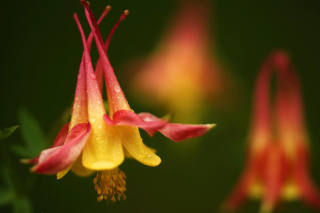
From our perspective as Columbine plants (*Aquilegia* spp.), we are generally resilient beings, but we face specific challenges that can compromise our health and beauty. Two of the most common are the internal burrowing of leaf miners and the superficial yet suffocating presence of powdery mildew. Understanding these issues from our point of view is key to helping us thrive.
To you, the problem appears as unsightly, meandering white trails or blotches on our otherwise beautiful green foliage. To us, it is an internal invasion. The larvae of tiny flies or moths hatch from eggs laid on our leaves and immediately burrow inside the epidermal layers. They are safe in there, protected from many external treatments and predators. As they feed on the tender, photosynthetic tissue between the leaf surfaces, they create those visible tunnels. This directly robs us of our ability to produce energy from sunlight. A severe infestation means large sections of our leaves become necrotic and die, drastically weakening us. We become less vigorous, our flowering potential diminishes as we divert energy to survival, and we are left vulnerable to other stressors.
Our preferred solution is simple and non-invasive. Please regularly monitor our foliage. As soon as you see the tell-tale trails, simply pinch off the affected leaf and dispose of it in the trash, not the compost. This physically removes the larvae and interrupts their life cycle. For us, losing a leaf or two is a far lesser burden than hosting a colony of miners. This method preserves the beneficial insects in our garden that help keep other pests in check. In severe cases, a systemic insecticide might be considered, but we urge caution, as these can also harm the pollinators we so dearly depend on for reproduction.
This fungal issue presents as a white to grayish, powdery coating on our leaves, stems, and sometimes even flower buds. From our perspective, it is like trying to breathe and eat through a thick blanket. The fungal mycelium grows on the surface, but it sends haustoria (tiny root-like structures) into our cells to steal nutrients. Most critically, the coating blocks sunlight, severely hampering photosynthesis. It stresses us immensely, causing leaves to curl, twist, and yellow prematurely. While it rarely kills us outright, a bad infection saps our strength, leading to stunted growth and a lackluster display the following season.
Our biggest request regarding this foe is space and air. Please plant us with adequate spacing to allow for good air circulation, which helps our leaves stay dry and creates an environment less hospitable for the fungus. Water us at the base in the morning so our foliage has time to dry completely under the sun. If the problem appears, you can help by removing the most severely infected leaves. For persistent issues, we respond well to treatment with a horticultural oil or a biological fungicide like neem oil, which smothers the spores without causing us significant harm. In worst-case scenarios, a sulfur-based fungicide can be used, but please follow label instructions carefully to avoid damaging our delicate tissues.