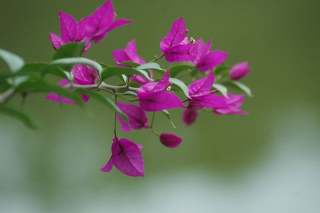
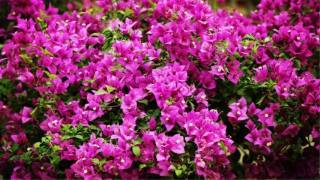
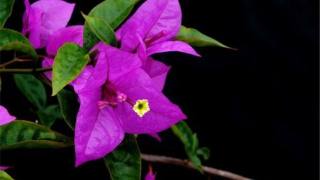
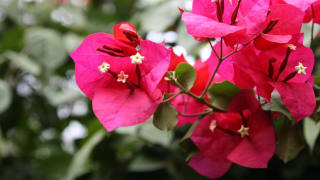
From our perspective as Bougainvillea plants, nutrient deficiencies are not merely a horticultural problem; they are a direct threat to our vitality, our spectacular displays of color (which are actually modified leaves called bracts), and our very survival. We rely on a precise balance of elements from the soil to perform essential functions. When that balance is disrupted, we must communicate our distress in the only way we can: through our physical appearance.
When nitrogen is scarce, our entire energy production system is jeopardized. Nitrogen is the fundamental building block of chlorophyll, the molecule that allows us to capture sunlight. Without it, our once deep green foliage pales to a uniform, sickly yellow (chlorosis). Our growth becomes severely stunted, and our stems may turn a reddish or purplish hue as other pigments become visible in the absence of green chlorophyll. We are simply unable to produce the energy needed to support vibrant bract growth or our basic metabolic functions.
A lack of phosphorus strikes at the heart of our developmental processes. This element is crucial for energy transfer (ATP) within our cells and for strong root development. When deficient, our root systems remain small and weak, making it difficult to uptake what few nutrients and water are available. Our overall growth is severely stunted, and our leaves may develop a unusual dark green or even purplish discoloration. Most critically, our ability to produce and support our beautiful, papery bracts is dramatically reduced, leading to poor or non-existent flowering.
Potassium is not a building block but a regulator, acting as an enzyme activator that governs critical processes like water regulation and disease resistance. Without adequate potassium, we become vulnerable. The edges and tips of our older leaves begin to scorch, turning brown and crispy (necrosis), a condition known as "marginal burn." Our stems become weak, and we are far more susceptible to drought stress and attacks from pests and pathogens. Our overall vigor declines, making us unable to sustain healthy foliage or bracts.
While both cause chlorosis, the pattern tells you which element we are lacking. Iron is immobile within our systems, meaning we cannot move it from older tissues to new ones. Therefore, a deficiency appears as bright yellowing on our youngest leaves while the veins remain green (interveinal chlorosis). Magnesium, however, is a mobile element and a core component of the chlorophyll molecule. When scarce, we pull it from older leaves to support new growth. This results in interveinal chlorosis on the *older* leaves first, while the veins typically stay green, creating a marbled effect.
To help us recover, a targeted approach is needed. A soil test is the most accurate way to diagnose our specific ailment. Please provide a balanced, water-soluble fertilizer formulated for flowering plants, but ensure it also contains essential micronutrients like iron and magnesium. For immediate relief of micronutrient deficiencies, a foliar spray can be effective as we can absorb nutrients directly through our leaves. Most importantly, ensure our soil is well-draining, as waterlogged roots cannot access any nutrients, effectively creating a deficiency even if those nutrients are present in the soil.