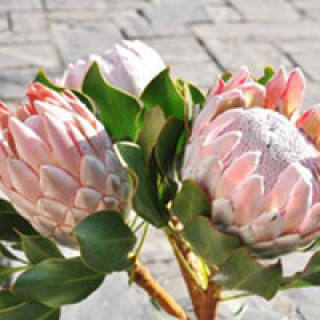
As the national flower of South Africa, the King Protea is a spectacular choice for the ambitious home gardener. This variety is renowned for its enormous, bowl-shaped flower heads, which can reach up to 12 inches in diameter. The blooms consist of a central mass of inner flowers surrounded by stiff, colorful bracts, typically in shades of white, pink, or deep crimson. From a botanical standpoint, P. cynaroides is a resilient plant that thrives in well-drained, acidic soil and requires full sun exposure. It is surprisingly adaptable once established, demonstrating moderate frost tolerance (down to around 25°F or -4°C) and excellent drought resistance due to its thick, woody stem and extensive root system.
An excellent and reliable variety for beginners, the Sugarbush Protea is known for its hardiness and prolific flowering habit. Its botanical name, repens, meaning "creeping," is somewhat misleading as it forms a large, upright shrub. This species produces an abundance of smaller, conical flower heads with a distinctive sweet nectar secretion, a trait that attracts pollinators. For the home gardener, its key advantage is its adaptability to a wider range of soil types compared to other proteas, though it still demands excellent drainage. P. repens is also one of the more cold-tolerant species, handling brief periods of frost, making it suitable for gardens in USDA zones 9-11.
Prized for its unique and elegant appearance, the Pink Mink Protea is a fantastic ornamental shrub. It features long, narrow, grey-green leaves and striking cylindrical flower heads. The blooms are adorned with fluffy, silvery-pink or cream bracts that are often tipped with a dark, velvety black, resembling a mink's fur—hence its common name. Botanically, P. neriifolia is a tough and resilient plant. It is highly wind-resistant, making it ideal for coastal gardens, and is also notably drought and frost hardy. It requires a sunny position and perfectly drained soil, thriving on neglect rather than excessive care or rich fertilizers.
For gardeners seeking bold foliage and spectacular flowers, the Duchess Protea is an outstanding selection. This large, upright shrub boasts beautiful, broad, blue-grey leaves that provide year-round visual interest. In the flowering season, it produces large, stunning blooms with bracts that range from soft pink to deep carmine red, often with a soft, silvery sheen. From a plant health perspective, P. eximia is particularly valued for its resistance to the root rot fungus Phytophthora cinnamomi, a common ailment in proteas. It is a vigorous grower that tolerates heavier soil than most other proteas, provided the drainage is still very good, and it can recover well from pruning.
The Bot River Protea is a dense, rounded shrub that is exceptionally well-suited for smaller gardens or container growing. It is a prolific bloomer, producing a mass of medium-sized, pink to deep red flower heads throughout the winter and spring months. Botanically, its compact growth habit (compacta) is a key feature, requiring minimal pruning to maintain its shape. This species is exceptionally tough, exhibiting high tolerance to wind, drought, and moderate frost. It is perfectly adapted to nutrient-poor soils and will suffer if fertilized with phosphorus-rich products, a critical consideration for all proteas in the home garden.