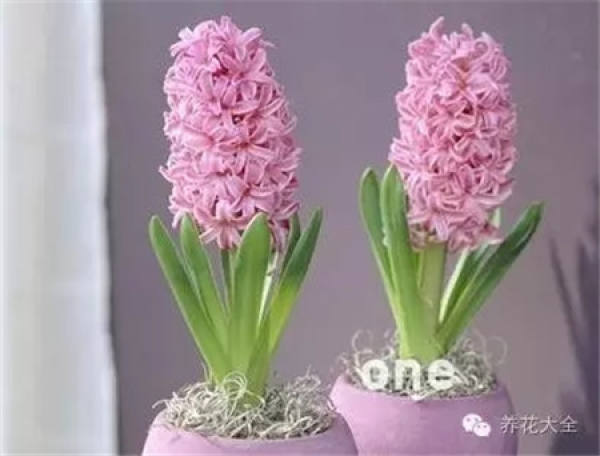
Hyacinth is actually a short sunshine plant, so if you often let hyacinth bask in the sun, it is easy to cause hyacinth not to bloom. Put the hyacinth in the bright living room and receive the scattered light. The frequent sunshine will prevent it from blooming.
After the leaves grow out, the temperature is controlled at about 20 ℃, which can ensure the normal flowering of hyacinth.

Only seedlings over three years can bloom. In the purchase of Clivia attention to ~ if you want to bloom in that year, do not choose seedlings ~
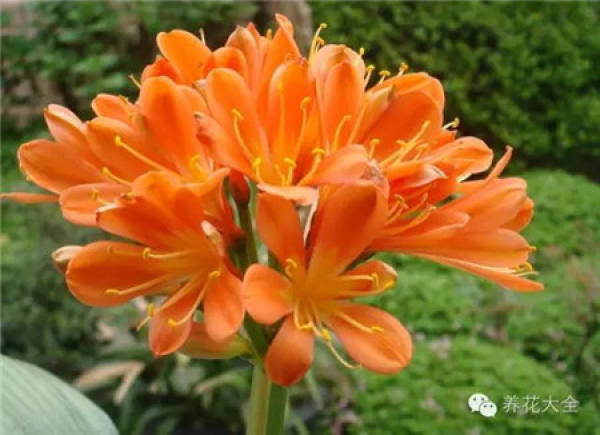
Adult Clivia can promote flowering by artificial temperature difference. The temperature is about 10 ℃ ~ 15 ℃ at night and about 25 ℃ during the day. It can promote the flowering of Clivia and prevent the Clivia from arrows.
Autumn and winter are the period of flower bud differentiation of Clivia. At this time, insufficient light will be harmful to flower bud differentiation. After the weather turns cool, gradually strengthen the light (bright scattered light), but do not let the strong light directly.

Chrysanthemum is a short sunshine plant. Under the condition of light less than 12 hours a day, flower bud can be differentiated, and then under the condition of short sunshine, low temperature and temperature difference of about 10 ℃ between day and night, the terminal bud can be transformed into flower bud and flower bud can be pregnant. Therefore, artificial shortening of light, extending the dark period to more than 14 hours, forming short sunshine conditions, can promote flower bud differentiation, early flowering.
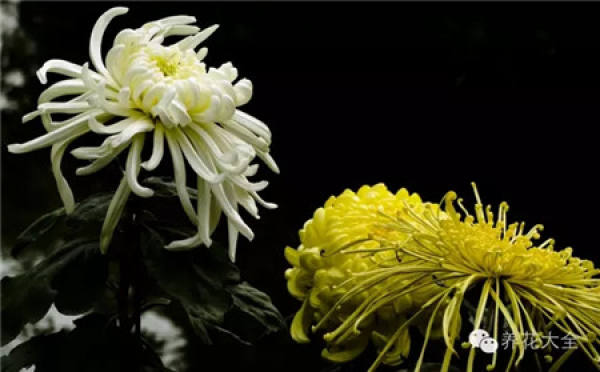
For example, too much water at seedling stage, too much nitrogen and lack of phosphorus and potassium fertilizer, untimely pruning, too early or too late picking, cutting techniques, etc., will affect the flowering of chrysanthemum. Therefore, reasonable maintenance is necessary, more application of phosphorus and potassium fertilizer, can promote flowering.
In the first time, when the chrysanthemum seedling has formed root system, that is, about 3 weeks after cutting, the top shoots that have not been carried out can be removed.
The second coring is in the axil of the top leaf, when 4-5 leaves are grown, the weak leaves are removed and the coring is done once every 1 month or so.
After the end of August, stop picking the heart, select and keep the branches with good growth potential, and cut off the excess to prevent the waste of nutrients.

Seedling (seed seedling) and tissue culture seedling may not bloom even if they have been cultivated for many years.
The content of nitrogen fertilizer in orchid is too much and the content of phosphorus and potassium fertilizer is too little, which leads to the excess of nutrition growth and the inhibition of reproductive growth. The solution is to replace the nitrogen, phosphorus and potassium nutrition balanced plant material or increase the application of phosphorus and potassium fertilizer.
Potash fertilizer, the simplest one is the ash of plants and trees. The remaining ash after the wood is fully burned. Phosphate fertilizer, all kinds of animal bones stew, grind into powder shape can be, sea fish bone is good

Although the tea plum itself is quite cold resistant, but does not include its flower bud. If the flower bud is frozen, it will wither easily, so pay attention to keeping warm after the tea plum appears.
Now the air conditioning room and heating room in the more common problems, so at ordinary times, more to the tea plum near the water spray, increase air humidity

It's not summer to put the tea plum in the sunny place, such as the balcony facing south. Don't worry about the burn!

Begonia flowering also needs light, long-term will be placed in the dark place it will not bloom, so you quickly move it to the place with strong light!
Too much nitrogen fertilizer, too little phosphorus and potassium fertilizer, phosphorus and potassium fertilizer is the key to flowering, so, for your Begonia, put more phosphorus and potassium fertilizer!

Florist Kalanchoe likes a sunny environment, which ensures that it can grow healthily in direct sunlight for more than 4 hours every day. All parts of Florist Kalanchoe are not evenly exposed to light, and the plant is deformed, which will also affect flowering. Therefore, in order to ensure that the longevity flower light is appropriate at the same time, do not forget to turn the pot.
Longevity flower is a kind of fertilizer loving plant, with a flowering period of 6 months. It needs more nutrients than other flowers. The flower bud differentiation of Florist Kalanchoe is slow under the condition of lack of fertilizer. Even if the plant has more branches, but lack of nutrients, it is difficult to ensure that flowers will bloom on each flower head. Therefore, fertilization and fertilization ~ nitrogen fertilizer and phosphorus and potassium fertilizer should not be less ~ thin fertilizer should be applied frequently ~
Phalaenopsis on the temperature requirements is still relatively high, but now the heating room can basically meet this condition, Phalaenopsis suitable for growth temperature of 16 ℃ to 30 ℃
Phalaenopsis like high temperature and high humidity environment, but the biggest feature of heating room and air conditioning room is easy to dry air, so usually we should pay attention to spray water around Phalaenopsis to keep air humidity.

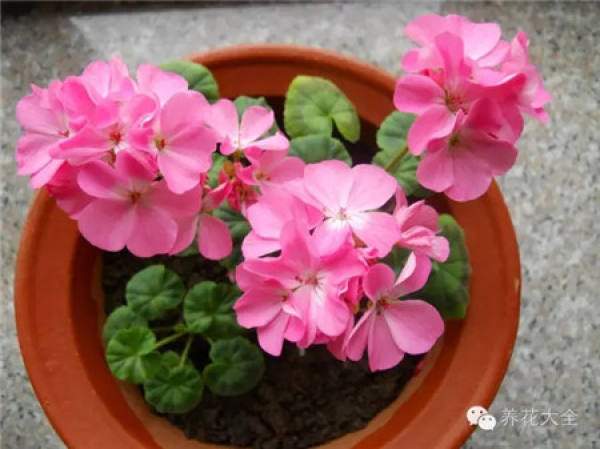
In winter, when the room temperature is above 20 ℃, and the indoor ventilation is poor, the branches and leaves are easy to grow in vain, which will affect the next year's flowering. However, when the winter temperature is lower than 0 ℃, the branches and leaves are vulnerable to frost damage, and the leaf margins turn yellow and soft. Geranium is also sensitive to temperature change, such as sharp changes, will cause flowers to fall off.
In particular, excessive nitrogen fertilizer is easy to cause the branches and leaves to grow in vain, do not bloom or bloom sparsely, and poor flower quality. However, insufficient or no fertilization will also affect the normal growth and flowering of plants. Therefore, in early spring or early autumn should be appropriate to apply more scale potash
Too much water or rain, long-term water in the basin, resulting in rotten roots, yellow leaves or plants are affected by excessive flowering.
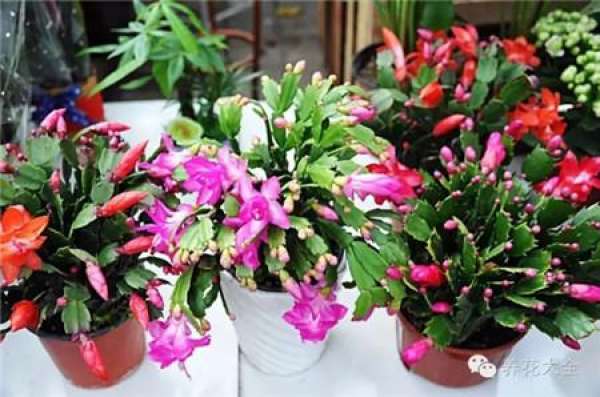
Crab claw orchid is a short sunshine plant. When the light is more than 10-12 hours a day, it is difficult to form flower buds. If there is enough light in the day and strong light in the night, it will also affect the flowering of pregnant buds.
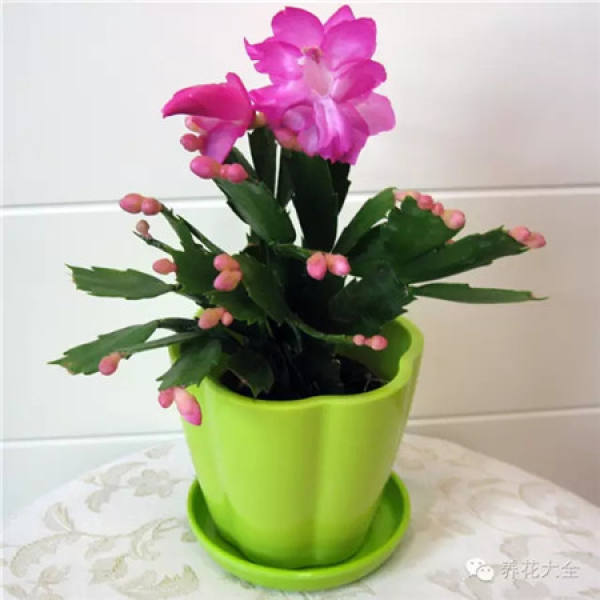
When the room temperature is too low, the Christmas Cactus which is pregnant is difficult to blossom. At this time, the flower pot can be moved to the warm room to keep the temperature above 18 ℃, and then it can be moved back to the original room for viewing after flowering.
When the temperature difference between day and night is too large, the pregnant flower bud will be damaged or fall. Therefore, from the middle of October to the middle of November, the pregnant flower bud should be moved into the room in time to avoid the sudden temperature change. Usually, it is sunny outside in the daytime to promote the pregnancy of the flower bud. At night, it is necessary to prevent the excessive temperature difference.
The optimum temperature of tea bud stage is 10-15 ℃. Cold air activities are frequent in early winter and spring, and the temperature often suddenly drops below 5 ℃, which will lead to frostbite of flower buds without flowering. Therefore, in the daytime, the flowers should be placed in a warm place without wind and sun, and moved indoors at night. If the temperature is below 5 ℃, the plastic film bag should be used to cover the flowerpot to increase the temperature.
In winter and spring, after 10 a.m. on sunny days, spray or spray the camellia flowers to keep the air humidity. Generally, water every 3-5 days on a sunny day to keep the basin surface wet, not too dry or too wet. The large basin can be watered every 5-7 days. The ground plant Camellia, should grasp the water spray or watering flexibly according to the situation.

The frequent application of fertilizer makes Camellia grow three times in a year. So that it has no chance to bud and bloom. Only long leaves do not bloom.

Put it in the bright part of the room, see some sunshine in winter, give plenty of light to the bamboo
Keep the air moist, water well, do not make the basin soil water, can let the root of the bamboo grow, make the root developed
Application of phosphate fertilizer, potassium dihydrogen phosphate can be topdressing, promote its flower bud differentiation, and moderately increase the light, you can bloom.
The biggest reason why flowers don't bloom
Or you flower friends do not understand their habits, maintenance problems, so when starting a flower, we should first understand their habits!