Lilies (genus Lilium) and daylilies (genus Hemerocallis) belong to entirely different plant families. True lilies are part of the Liliaceae family, which includes around 100 species of herbaceous flowering plants. Daylilies, on the other hand, are members of the Asphodelaceae family. Despite their similar names and flower appearances, they are not closely related botanically.
True lilies grow from bulbs, which are underground storage organs composed of fleshy scales. These bulbs are perennial and can produce stems, leaves, and flowers year after year. In contrast, daylilies grow from fibrous roots or tuberous rhizomes, which are thickened underground stems. This difference in root structure affects how the plants spread and propagate.
Lily leaves are typically narrow, lance-shaped, and arranged in whorls or spirals along the stem. They are smooth-edged and may be glossy or matte. Daylily leaves, however, are long, strap-like, and grow in a clumping fashion from the base of the plant. They are often arching and have a grass-like appearance, which distinguishes them from true lilies.
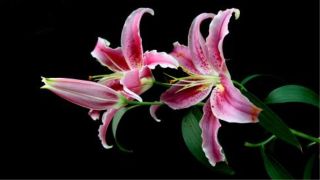
Lily flowers are large, trumpet-shaped, or bowl-shaped with six tepals (petals and sepals that look alike). They often have prominent stamens with pollen-covered anthers and a central pistil. Daylily flowers, while similarly shaped, last only one day (hence the name "daylily"). Each flower has three petals and three sepals, but they are often indistinguishable from one another. Daylilies also lack the conspicuous stamens and pistils seen in true lilies.
True lilies typically bloom once per season, with flowers lasting several days to a week. The flowering period varies by species but is often in early to mid-summer. Daylilies, however, produce multiple flower scapes (stems) over a longer period, with individual flowers opening sequentially. Some daylily cultivars can bloom for weeks or even months, depending on the variety.
Lilies reproduce primarily through bulbs, which can be divided or grown from scales. They also produce seeds, but bulb division is more common for cultivation. Daylilies spread via rhizomes and can form large clumps over time. They are also prolific seed producers, though many hybrid cultivars are sterile. Division is the most common method for propagating daylilies in gardens.
Many true lilies (especially Lilium species) are toxic to cats and can cause kidney failure if ingested. Some lily bulbs are edible for humans, but caution is advised. Daylilies, however, are non-toxic to humans, and their flowers, buds, and tubers are edible. They are used in culinary dishes in some cultures, though individuals with allergies should exercise caution.
Lilies prefer well-drained soil and full sun to partial shade. They are often grown in beds or containers and require moderate watering. Daylilies are more adaptable and can thrive in a wider range of conditions, including poor soil and drought. They are often used in landscaping for their hardiness and low maintenance.
True lilies are prized for their striking, fragrant flowers and are often used as focal points in gardens or cut flowers in arrangements. Daylilies are more commonly used as ground cover, border plants, or mass plantings due to their prolific blooming and ease of care. Their grass-like foliage also provides texture in garden designs.